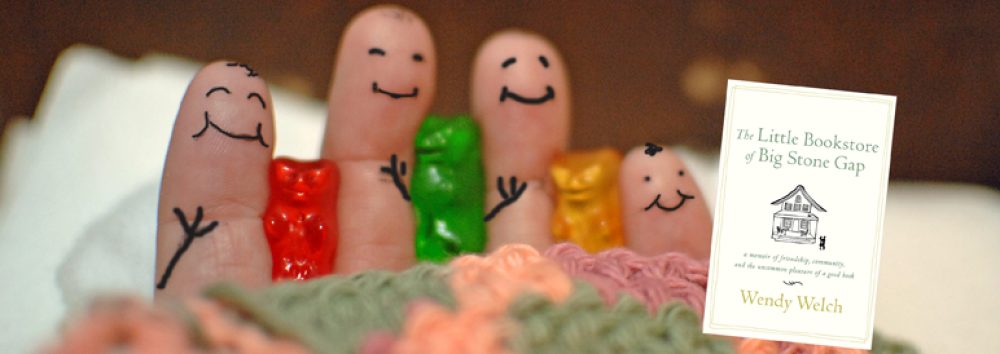
Those of you who read Little Bookstore of Big Stone Gap will recall a certain chiropractor. Teri gave us unlimited access to her color photocopier in return for free range of the bookstore.
A few years later, we bought our own copier and told Teri her book credit would run out when her middle daughter started college.
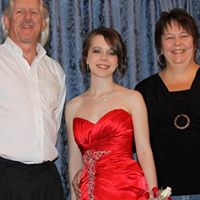 Maeve (and boys, her dad at photo left is a crack shot with a rifle) started college Jan. 13. In the week between Christmas and New Year, Teri appeared with several reusable shopping bags.
There is something glorious about helping your friend shop for books when there is no spending limit. “Try this! What about her?!” We overlap in reading tastes, both enjoying dysfunctional family sagas, but I need a happy conclusion, or at least a path forward, while Teri doesn’t mind if the heroine commits suicide.
We had a grand time ransacking the shop for dark matter to add to her “read this someday” shelves. We started with Latte Lit (fiction of other times and places) and Southern. As I handed her tomes, she said at one point, “How are you picking these? You’re pretty spot on.”
“I’m looking for books I didn’t like because they were too sad or scary.”
She whacked me with a copy of Little Children (Tom Perrotta).
In less than an hour we had two stacks reaching past her waist, and Teri sat down to do a final cull. As she read the back jacket of a novel, she asked, “Who writes these?”
I glanced at the book in her hand. “Sophie Dahl, I guess” and she snorted.
“The jacket stuff. It’s so important. Like, I’ve decided I won’t like this because it went from sharp to ‘enchanting’.” She pointed at the offending word.
I thought of all the conversations I’d held with Nichole and Pamela about the jacket copy to my own debut memoir. “Yeah, they take that stuff pretty seriously,” I said.
“They should.” Teri sniffed, tossing Dahl aside.
Our photocopier godmama went out the door with some 50 novels and a few memoirs I forced on her. “C’mon, you only like despair if it’s fake?” I griped, and she sighed and shoved Falling Leaves into her bulging bags.
On Saturday, Jan. 11 I sent Teri a Facebook message. “Classes start Monday and we’re closed Sundays. Just sayin’.”
She showed up that afternoon, and we pillaged again. As she went out the door with perhaps another 75 books, Teri hugged me. “So from here on out, I’m a cash only customer, right?”
I grinned back. “Right. How long you think this can keep you going?”
Teri laughed. “My greatest fear in life used to be boredom. Then I had kids. Now I fear dying before I can get enough time to myself to read all the books I have waiting.”
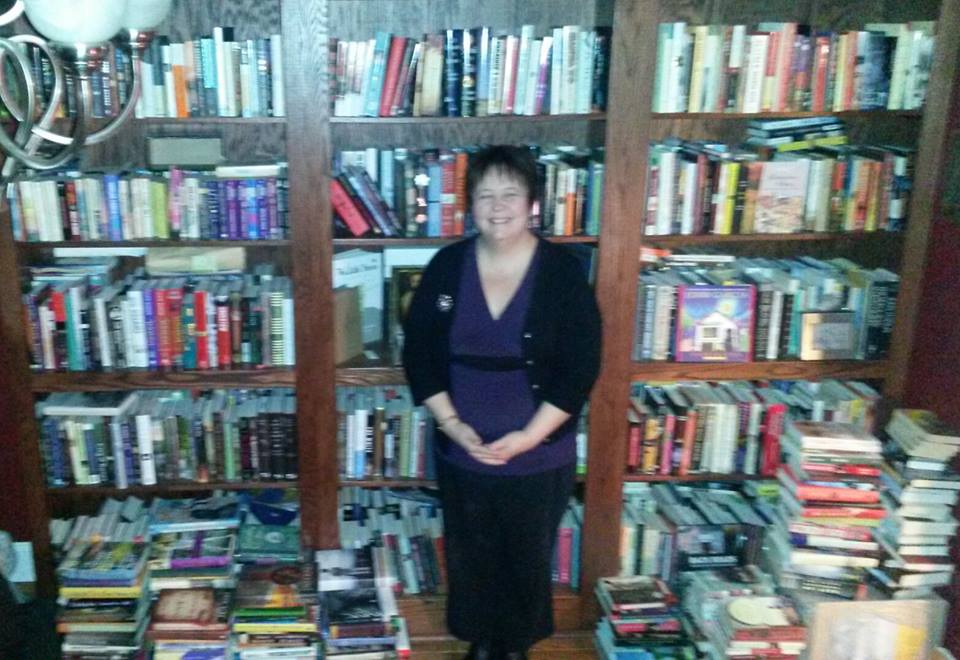
This is Teri’s “to be read” stash. I’m proud to have helped add years to her lifespan.