
Wha Daur Meddle wi ma Lingo – –

Jack’s Wednesday post makes it over the line in time – –

As Wendy continues to deliver masks, hand sanitizer and gloves around this corner of the world as well as trying to hit three publisher deadlines, I’m still holding the fort here on her blog. She is hoping to be back next week!!

I may have posted about this before, but language is something that fascinates me, and particularly my own Scots language. From an early age I have spoken a mixture of standard English and Scots. More recently, my singing of songs and ballads in Scots has probably made me even more aware and more knowledgeable. It didn’t hurt to have a grandfather living with us from my birth until I was fourteen who was a very natural Scots speaker.

Because of the ‘Scotch-Irish’ who were the main settlers here in Appalachia I’m often asked about my language and vocabulary whenever I sing at concerts or festivals. This is what I usually say – Scots and English are two different but related languages. Think of Spanish and Portuguese, or Danish and Norwegian. The same kind of relationship. Scots differs from English in many ways – sentence structure, vocabulary and pronunciation etc. It’s not simply a dialect of English.

The problem is that when the King James Bible was published English became the predominant written language throughout Britain, while Scots continued until very recently as only a spoken one. Over time and following the establishment of The United Kingdom Scots began to be regarded as a ‘sub-language’ and for anyone to succeed in life they had to master English.

So let’s take a look at some examples of Scots language alongside the English translation –

It’s a braw bricht moonlicht nicht the nicht (it’s a lovely bright moonlit night tonight).

Mony a mickle maks a muckle (lots of small things makes a big thing).

Ah kent his faither an clappit his dug (I knew his father and even patted his dog).

Through the historical connections over many centuries with other European countries, Scots has often borrowed words from Germany, France and Scandinavia. Kirk for Church (German), bigging for building (Scandinavian), ashet for large plate (French). There are also some imports from Gaelic such as whisky and loch.

Because Scots became a mainly spoken rather than written tongue various local versions developed over the years, So Aberdonian is quite different from Glaswegian or Fife.

Happily, following the re-convening of the Scottish Parliament there has been a greater effort to encourage a proper appreciation of my language in schools and colleges.

But something that still depresses me is when I see written passages with apostrophes to indicate supposed missing letters – continuing to suggest that Scots is just poorly pronounced English. No, it isnae ava.

If you’d like to find out more this is a great resource – https://www.scotslanguage.com/articles/node/id/575
Political Shenanigans – – –

Jack’s Wednesday post hits the ground running and appears on Wednesday

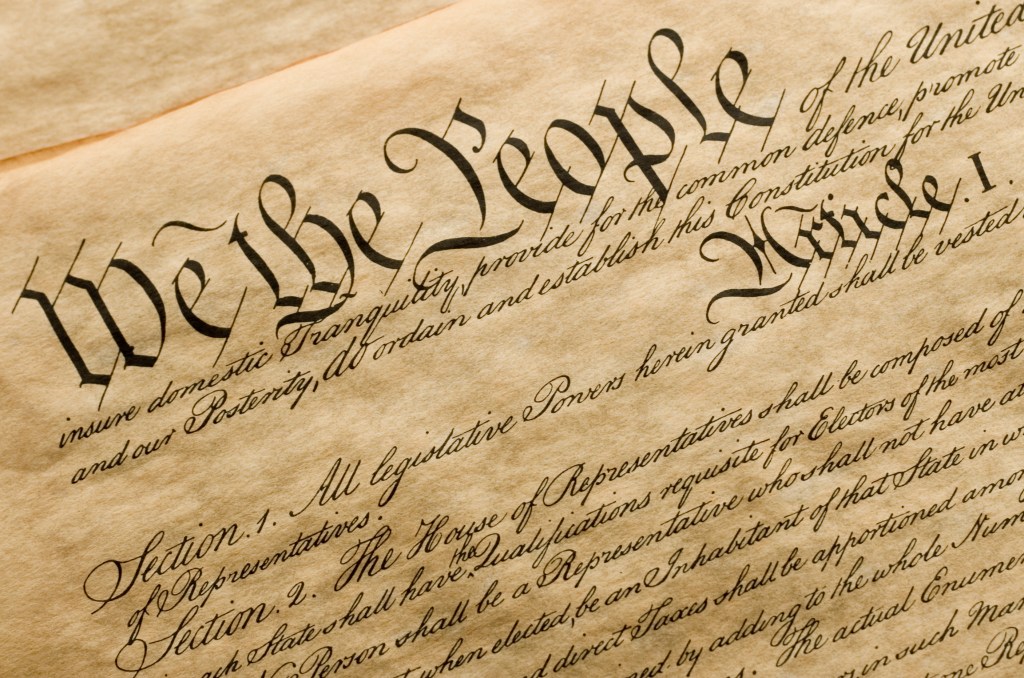
I try hard to avoid political posts, so this one won’t take positions (much) but I get a bit frustrated by the lack of understanding about political movements by many folk here in the United States. Here are definitions offered by a Scottish Quaker who doesn’t have a lot to do with politics, but taught these definitions for about three decades:

Communism is a perfectly normal philosophy which you may or may not agree with. It was very popular in the US between 1930 and 1946. It believes in ‘from everyone according to their means and to everyone according to their needs’. Marxism is not the only branch. Communism has been used to scare Americans since 1917—often very successfully. Beware people who yell beware the communists.

Anarchism (not to be confused with anarchy) is also a perfectly legitimate philosophy. It believes in local democracy but is against nations and national governments. It does believe in co-operation between local institutions to help further the common good.

Socialism is another perfectly normal philosophy which is usually the political face of organized labor. The word ‘socialist’ has often been hijacked by non-socialist organizations such as the German Nazi party of the 1930s and 40s which was completely opposed to organized labor (preferring slave labor) and Socialism.

Fascism is yet another normal belief and still quite widespread. Fascists believe that society should be ruled by a deserving class. Either through race, religion, bloodline (royalty) or military power. No elections and no democracy.

Oligarchy is like fascism, except it holds elections. But only the people who can afford it vote, and only those who can afford to run for office, do so. So it is kind of a rich-favoring democracy. America is an oligarchy.

Capitalism is the (again, perfectly normal) belief that market forces (supply and demand) results in a balanced economy and community. However it doesn’t allow for any safety net for the disadvantaged in society.

Social Democracy is the form of government practiced by most Northern European nations and many others around the world. It aims for a balance between capitalism and socialism and with a safety net for disadvantaged citizens paid for through taxation. This is also a completely normal philosophy.

Proportional representation is a voting system which usually results in a multi-party coalition government, unlike the two party systems which have long predominated in the UK and the USA. It forces compromises and gives all voters a sense of ‘ownership’.

I’m not a member of any political party and haven’t been for a very long time, but I’d describe myself as a social democrat. Despite the fact that many people would deny it the USA is a Social Democracy with many services and safety nets paid for through taxes or contributions including infrastructure, Medicare and Medicaid, Social Security etc.

I posted this because of the amount of misinformation I see every day on Twitter and FaceBook. I’d love to see some comments.