
The Monday Book: THREE LITTLE WORDS by Ashley Rhodes-Courter

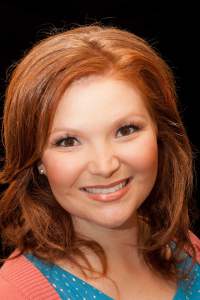
Ashley-RC-Headshot-1-1A clear, calm, journalistic approach to your own life? Hard to achieve, but Rhodes-Courter did. This memoir is one of those books that isn’t so much about the way it’s written as what it’s written about.

It’s about being a foster child available for adoption (eventually, when somebody noticed and the system got around to it) and winning the adoption lottery, because the parents who adopt you don’t “return” you, even when you put pills in their wine. (Read it; it’s kind of like horror comedy except these were real people coping with the moment.)

The descriptions of how Ashley felt at a young age of course have to come later, so they often have an adult spin put into a child’s word. Which gives it a kind of awkward clarity that’s really helpful if you’re trying to get to the core of the feelings involved. The chronological development of Ashley’s awareness of what kind of rabbit hole she’s fallen down is really described well, because she’s been there done that and chooses straightforward language to depict the twists, turns, and funhouse mirrors.

It is no small thing to turn a maze into a straight line and still let the readers understand what the maze was like. This is that kind of book – no poetics, no histrionics, just the feelings behind the facts. It’s also built on a moment that pretty much sets the tone for the whole book: those three little words are not, in the first instance, “I love you.” Which gives the memoir a lot of its power to help us understand what it means to learn to trust when you’ve seen so little reason for trusting.

An insightful, thought-provoking book, not overly sentimental and not given to voyeurism, is unusual in the growing field of “I was a……” true life books. Good for Ms. Rhodes-Courter. And good for those who want to understand what this strange, broken world of child “protection” looks like these days.


The Monday TV Programs: Rectify and Bloodlines

mermaids 021So here’s the thing, devoted readers: I’ve hit a dry spell on books. I’ve read like four this past week but none of them really set my mind to positive reviewing – and that includes the latest Philippa Gregory, sadly. The White Princess just seemed like a rehash gone bad.

Tsk.

But as I’ve been  whipping out mermaid tails (to cover cat care costs here at the Little Bookstore) I’ve been clocking TV time. We don’t have an actual television machine (a joke from the Dick Van Dyke Show my friend Jenny always brings up) but we do have Netflix. And over the last two weeks I have watched Bloodlines and Rectify.

I had no idea they were still making good, original drama anyplace. There are REAL PEOPLE in these shows, families with motivations, people whose lives circle central themes but who every once in a while just go crazy. You know, REAL people.

The characters on Bloodlines are caught in old family dynamics that never go away. The statute on childhood trauma doesn’t always run out. Four siblings and their parents at a Florida resort find that out the hard way. This show is one long character study, but it feels short because of the swift action, the amazing ways in which people screw up, and the clever ways in which the writers don’t try to tell you what to think; they just lay it all out there in the grey zone. Amazing writing, amazing characters, amazing show.

One flaw: the f-word is so overemployed that when the characters truly get mad, they have nothing left to fire with. In fact, one of the most inspired acting moments comes when the oldest brother is blue-white-heat angry, but all he says is “Oh, okay” because he hasn’t got any f-words left to conjugate. Brilliant acting, but whoever’s writing should tone it down a bit. Noun, adjective, verb, and I think at one point a pronoun? Dude – overused.

Then there’s Rectify. I am still in the midst of it, and it has some harsh moments, and is a bit overly interested in the sexuality of humans, but for the most part it’s a morality play along the same deep lines as Breaking Bad. It’s like a thinking person’s Clockwork Orange. What if… what if somebody did something horrible, or what if they didn’t but got punished anyway? What if all this happened in the South, where morality and Christianity aren’t always kissing cousins? What if the actors were not trying to stereotype anybody, and the writers knew what they were talking about?

You’d have an amazing two-season run of a Georgia-based series about a guy let off Death Row based on new evidence, and how the community and his family reacted to him. And how he reacted to a new life. It’s really compelling. (As an added bonus, while on Death Row the main character was an avid reader, so lots of lit references get thrown into dialogue.)

I’ve made four mermaid tails so far and have two to go, so it’s a good thing I have all of season two on Rectify to watch yet. And yes, I accept that booksellers recommending TV shows is just a little off plumb, but I’m okay with that. Do yourself a favor and check out these Netflix shows.