
Jack’s guest Monday book review – Desert Queen by Janet Wallach
 This fascinating account, set during the height of British imperialism, follows the life of the remarkable Gertrude Bell. Little remembered until the recent Iraq wars, it was she who sat down in 1919 and quite literally invented the country. She drew its borders, foresaw the difficulties, recommended how it should be governed, and negotiated and politicked until she got her way. That included choosing Iraq’s first King – Faisal – and making sure he was put on the throne.
The book covers her life from the late 1800s through the late 1920s. A strong willed and intelligent youngster, she was one of the first women in England to be allowed to attend a university. She went on to become a noted mountaineer and traveled throughout the Middle-East as an explorer and antiquarian. Oddly for such an ambitious and atypical woman, she was staunchly anti-suffragist, seemingly thinking of herself as an exception. She did expect to get married, have children and play second fiddle to a husband, but never did. (She had two great loves – the first was deemed to have insufficient prospects by her father and the second was a married man who was killed at Gallipoli).
Just prior to the outbreak of the First World War she began to spend most of her time in Mesopotamia and became a kind of amateur spy and agent feeding information to the colonial offices in India and Egypt as well as the UK Government back in London. She operated very much as a lone-wolf, looked down on by the all-male officials and not fitting in with their wives. As a result she spent a great deal of time with the Sheiks and other local leaders, accepted by them as almost an honorary man.
The book was doubly fascinating for me in the way that it portrays the casual arrogance of imperial powers and the patronizing way that they (particularly France and the UK) divided up the region after the end of the war. Most of the Middle East had been part of the Ottoman Empire, but with Turkey defeated and oil now seen to be so important, an undignified series of negotiations took place and the whole vast area split into brand new countries with puppet leaders. Iraq, Persia, Syria, Jordan, Lebanon and Saudi Arabia were conjured up but poor Kurdistan (that had been promised its own state) is still waiting. Then there was Palestine – –
Finally you may wonder why the subject of this book isn’t as well known as the famous ‘Lawrence of Arabia’, who was a friend and contemporary of hers. I think the answer is simply that T. E. Lawrence was a man and she was a woman. He was the acceptable dashing young adventurer who fitted the stereotype and she wasn’t. In fact it was because she was a woman and had to operate ‘under the radar’ that she was so successful.
I just wish Messrs Bush and Blair had read this book – they might have done things differently!
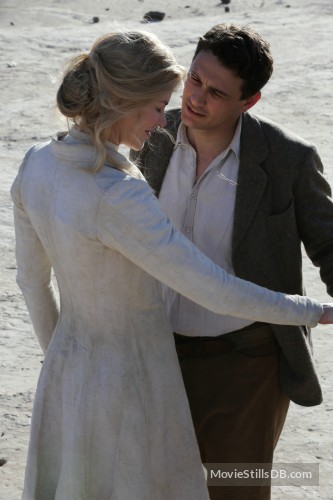
Two enthusiastic thumbs up from this Scottish reviewer. And I’m waiting for the movie starring Nicole Kidman andvJames Franco, directed by Werner Herzog, due out next month on general release.

 Wendy Welch: Books, Yarn, Cats, Opioids