
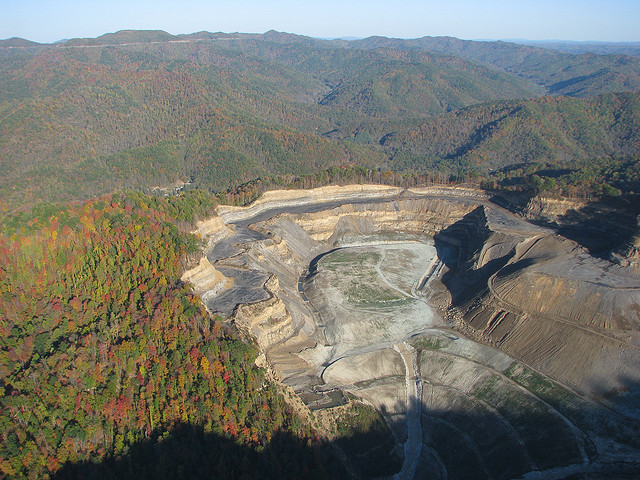
 Normally I only do Monday Books on those I’ve liked. This one is a bit half-hearted, but Grisham’s latest is set in our region and tackles the much-ignored topic of mountaintop removal, so almost everyone around here feels an obligation to read it. We need opinions for the church potlucks.
Obligation is a pretty good word. I don’t like dissing authors, or books – unless they’re real creeps, and Grisham isn’t. He just….. kinda didn’t do anything exciting in this book. And, inevitably, even though he spent time in SE Kentucky with some people dedicated to stopping MT removal AND bringing social justice to the Coalfields, he got some important stuff wrong.
It isn’t a big deal that the mileage and directions are way off in his book. It’s fiction. It isn’t a big deal that sometimes he slides into stereotypes even though you can tell he’s trying not to – kinda like a kid learning to ride a bike will guaranteed hit the pothole she’s watching with her whole being, intent on avoiding it. You always hit what you concentrate on avoiding, because you’re concentrating on it rather than the story you have to tell. We don’t mind; it was nice of him to try.
But I knew we were in trouble when Grisham started the serious action of his book with an old “legend” that circulates about SW VA/SE KY/NE TN mountain roads.
The book itself opens with the heroine getting laid off from her high powered-yet-hated legal job. She has a chance to keep her health insurance if she goes to work for a nonprofit, and she winds up taking the “bottom of the barrel” with the only remaining option: in the Coalfields of Appalachia. It must be hard for an author to try not to stereotype while writing about a NYC character coping with moving out of Manhattan. He tried, bless his heart. It made the book a bit flat because at the points where people would’ve been asking some serious questions, the heroine gets all open-minded. Still, his mechanism for driving her to VA is a good one: keep your health insurance if you leave the land of the midnight latte for the exile of rural America. Nice try, Johnny, but your logistics are showing.
Maybe that’s the biggest problem throughout the book. HOW he was trying to tell the story showed as much as the story.
Anyway, she drives into a town thinly disguised as being not-Grundy, VA, and a guy pulls her over in an unmarked police car and threatens her with all kinds of things if she doesn’t come back to the station with him. Including handcuffing and a gun. Turns out he’s the local learning impaired dude who pretends he’s a cop and only pulls over people with Yankee license plates.
We are not amused. You can look up the stories on Snopes, but there really was a rape and murder under this scenario; the guys weren’t handicapped; they were felons. It is not funny to display color local characters in this manner, let alone a town complicit with such dangerous actions. {“Yeah, he’s weird, but he’s ours.”} I began to hate the book at this moment, and probably couldn’t give it a fair read from there forward.
From then on the words skimmed past my eyes very much like an Arthur Hailey novel: all explanation and no storytelling; the facts of mountaintop removal thinly disguised as a fish-out-of-water story; lots of sensational details added about the main characters, a la the unnecessary drama of a Hollywood plot built around a love story. The whole thing just read like… well, like reading the script of your average mid-week 8 pm tv drama. I didn’t care what happened to any of the characters, because I didn’t believe they were real.
Which is annoying, because–let’s give him credit–Grisham is the FIRST big deal author to tackle MT removal, and I don’t care how much I didn’t like the book, I love him as an author for doing that. GOOD FOR YOU MR. G!
But can I add, very sadly, that I wish he’d done a better job of telling a story rather than so obviously trying to talk people into hating the bad guys? The complexities suffered, and so did the communities. But thanks.
 Wendy Welch: Books, Yarn, Cats, Opioids