The Tuesday Book Sculptures

Sorry about yesterday, everyone. Traveling in rural areas of Scotland makes for spotty Internet. But all shall be forgiven, because I have now seen, in person, the Edinburgh Book Sculptures!

If anyone doesn’t know, I am a fanatic for these things. The backstory is best told on a different site, so I’ll just give you the basics here. In 2011, a mysterious little paper cut statue of a tree growing out of a book appeared in the Scottish Poetry Library. It was titled “Poetree” and had a tag honoring books, ideas, and words, thanking the library for existing.

Everyone thought that was nice, and then shortly a second statue appeared. And soon they were everywhere: the National Library, the Storytelling Centre, the Writer’s Museum, the Filmhouse, the Central lending library for Edinburgh, and the National Museum. Always celebrating words and ideas and thanking the institution (all of whom had free admission) for being there.

The sculptures gathered enough attention to have a book put out: GIFTED. And the best part is, once the sculptures gained international attention, it didn’t take the media long to figure out who had made the statues. And at her request, they withheld her name. So very British.

The other fun part about the sculptures is the books they are made from: the dinosaur from AC Doyle’s Lost World, the Hyde street scene from Dr Jekyll and Mr Hyde. And most of the rest from Ian Rankin novels (a great crime writer based in Edinburgh).

This is a random sampling of some of the statues, which I have now finally seen in person. Some of the venues were rather startled by my ardent worship, but I am a happy person.

19149116_1638371752840549_3990590550287594453_n

Who knows where the time goes –

Once again Jack misses his deadline and the Wednesday guest post appears on Thursday –

This is the title of a great song by Sandy Denny, who died far too young after falling down stairs once too often.

I find myself humming it over and over, here in Edinburgh once again, at the age of 75, after not falling down stairs very much at all—or at least not hurting myself when I did.

Edinburgh gives me a funny feeling, one I imagine must be felt by anyone of advancing years who experiences a less and less familiar place over a lifetime.

edinburgh

I first came here as a teenager to attend a jazz club on Tuesday nights–a 30-minute train journey on a pal’s “borrowed” student pass. It was glamorous and hippy. Outside of the August arts festival the place was mostly gloomy back in the Fifties, and if you missed the last train back you were stuck. Later I could borrow my dad’s car and the road bridge over the Forth opened – much more convenient and by then the folk scene had started. Gloom moved from buildings to music, one might say.

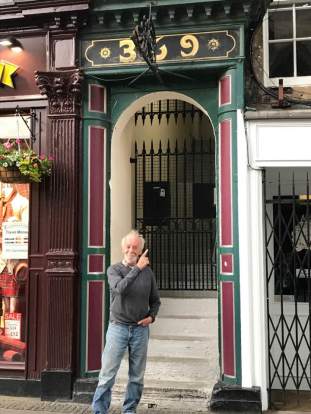
howff

The entrance to the jazz club is still the same (later the Howff folk-club)

The weird mix of nostalgia and alienation are exacerbated because Wendy and I are staying with my old singing partner of that folk scene. Barbara Dickson and I are both originally from Dunfermline, on the other side of the river Forth. We traveled that road to the big city morning, noon, and night to do gigs of every description, and every time I cross it, I remember something else from those fun, silly, earnest times.

And yet, as I return each year now leading a Scottish tour, the place seems more and more alien. The traffic is terrible, the good shops have gone, ghost tours and pub crawls advertised everywhere, every tiny corner has been turned into yet another marketing opportunity. Not that I can complain about marketing leading a tour, but a part of me longs to show Americans the way it was when it was a proud city bent on being rather than selling itself.

For all the tartan tat, Edinburgh manages to retain a certain grandeur – I’m really not sure how it does it. The 16th Century John Knox’s house in the old High Street is surrounded by awful opportunistic chain outlets – ‘kilt outfits for 100 pounds’ etc. (I wouldn’t advise buying one, or washing it if you do). That ancient house seems to just draw in its skirts and shrug them off, like many other historic buildings in the area.

Maybe we’re all destined to become curmudgeons as we age, lauding a golden past that never was. Or perhaps we all understand that commerce is driving the world now, not history, culture, tradition. Not that those ever did. If people remembered history we wouldn’t keep circling in the same paths.

So despite my curmudgeonly misgivings, Edinburgh retains a dignity and an allure beneath the shouts of tour leaders and vendors. There is more to Scotland than buying a plush Nessie in the High Street. Always has been, always will be.