
Jack misses the deadline again – – –
For the last twelve years I’ve been organizing small group tours of Scotland, and it’s been both good fun and an opportunity for me to visit new places.
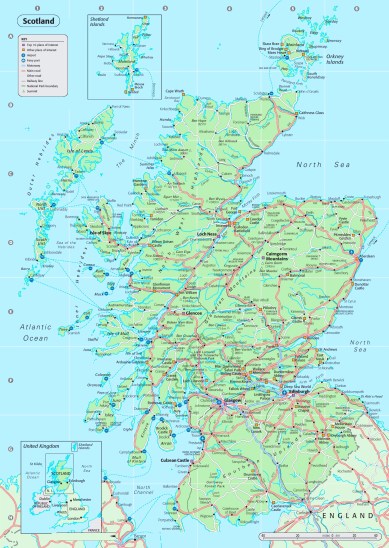
But it’s gradually become more work and more worrying. Every time some emergency happens (and they do) I think about the other things that could happen. I work with an agency over there for hotel and ferry bookings, and they are very good when things go awry, but still – – –
It was always the intention that Wendy would also be along, but it’s hardly ever been possible because of her work schedule. So she’s usually been left to ‘hold the fort’. I’ve always regretted that because on the few occasions she has gone she added a dimension that I couldn’t!
This year will be the final one and because it is we have lots of previous folk making the sentimental last tour. Happily, Wendy will make it this time for sure (the flights are already booked). But we have twice as many going and two mini vans instead of just one – – –
Of course this won’t be the last return to Scotland, but in future it will be different. Just with close friends and not traipsing from hotel to hotel.
The downside of all this is that most years Wendy and I have been separated for three weeks and that was brought home to me very forcefully just recently. She’s usually the one left alone. But her parents have needed support so she was the absent one recently, and I was the one left alone. What a salutary lesson!
 Charles Kaiser’s work, The Cost of Courage (Other Press, 2015) focuses on one Parisian family during the occupation of France from 1941-45. Of the six family members, three fought in the resistance but all paid the price.
 Wendy Welch: Books, Yarn, Cats, Opioids