I was gardening out front of the shop when one of our favorite customers pulled up. 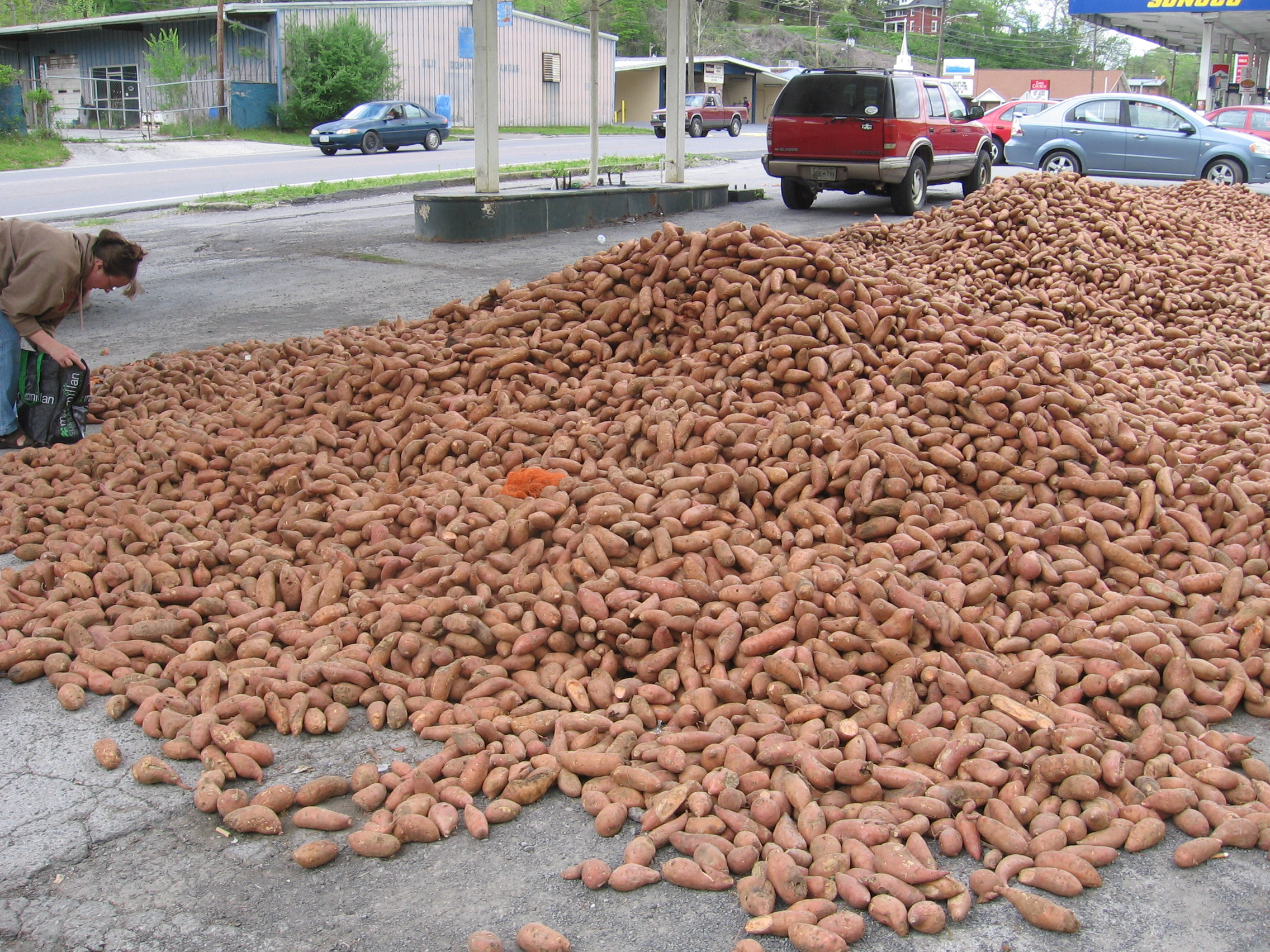
“H’lo, dear!” Ms. X waved a hank of fuzzy cloth. “I was yard sale-ing and found this jacket and said, ‘This looks like Wendy.'”
Hence the favorite thing. Not only does she do nice stuff like this all the time, she’s always right. I liked the pretty jacket instantly. Cost her 50 cents, which she did not want back.
Ms. X is one of many people around here who takes life by the horns that tried to gore her, and headbutts it. She and her son, both chronically ill, have no insurance; he has a crappy job. They live carefully in a house that labels them legally homeless, frugal to a fault with secondhand sales, day old baked goods, and the daily, considered creativity of what’s for supper. They don’t fish or garden for fun. But they have fun fishing and gardening.
“They’s sweet potatoes in Appalachia,” Ms. X winked as she departed, a couple of value paperbacks under one arm.
That’s not some mysterious Southern code. About every six months, in a little town two miles over, some person or persons unknown dumps produce under an abandoned gas station’s awning. Word of mouth goes out, and those as want it, go get it. Often it’s sweet potatoes, sometimes bananas. (When that happens, banana bread becomes currency and Huddle House runs a month-long “banana breakfast biscuit” special.) Rumor says once “the dump” was Hershey bars.
 I’d never availed myself of “the dump” before but my friend Elissa’s dogs LOVE sweet potato treats. Knowing she was busy helping another friend run a yard sale, in a fit of mischievous humor I grabbed a tea cozy, the back scratcher we use to turn off the kitchen light, and a role of tp. Racing to the sale field, I leaped from my car and shouted to Elissa, “QUICK, GET IN! I’LL EXPLAIN AS WE DRIVE!”
I probably should have remembered that Elissa is a news photographer. While everyone else stared, dumbfounded, with a swift flick of the wrist she held up her cell phone and snapped. And now I’m a meme on the Internet.
At the dump we got two bags for Elissa’s rescue dachshunds–who will waddle through this week in plump yam repleteness–and a bag each for friends we knew were busy. I asked Elissa, born and raised here, about the dump’s origins and she said rumor suggested some wealthy individual who’d made good elsewhere did it for his hometown. No one knows who, or why. And no one really questions. Why look a gift potato in the eye?
I imagine sweet Ms. X and her son sitting down to buttered baked yams, she saying, “…and for breakfast tomorrow there’ll be fresh sweet potato muffins.” On the counter sits a steaming potato casserole she’ll be taking to the church social.
Go by, mad world.


 Wendy Welch: Books, Yarn, Cats, Opioids