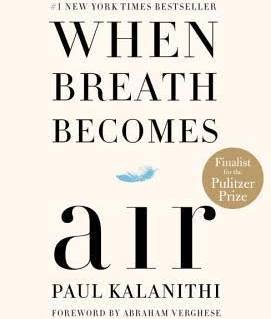
 A surgeon used to the negotiation between buying people time and curing them suddenly finds himself in the same position. And sums up the advice he’s been giving, the thoughts he had on this moments, from both sides.
One of the central themes of the book is “when you know you’re going to die, what do you spend your last year or two doing?” In that framework, Kalanithi’s writing moves between poetic and lyrical, and surgically precise.
He struggles with returning to work, and someone says this to him:
“That message is simple: When you come to one of the many moments in life when you must give an account of yourself, provide a ledger of what you have been, and done, and meant to the world, do not, I pray, discount that you filled a dying man’s days with a sated joy, a joy unknown to me in all my prior years, a joy that does not hunger for more and more, but rests, satisfied. In this time, right now, that is an enormous thing.”
That one’s lyrical. Then he and his wife (who were having marital problems coping with their dual schedules as medical residents, drifting apart in exhausted frustration) have this exchange, after they decide to go ahead with trying for a baby once they know he’s sick:
“Will having a newborn distract from the time we have together?” she asked. “Don’t you think saying goodbye to your child will make your death more painful?”
“Wouldn’t it be great if it did?” I said. Lucy and I both felt that life wasn’t about avoiding suffering.”
Surgically precise.
The book was Kalanithi’s dying wish, and that is actually recorded in the book when his wife Lucy takes over, and recorded in the afterword as well. The afterword makes clear that, had there been more time, more editing might have occurred, and that the book as it reads is a singular walk less than a full narrative. Paul was concentrating on Paul, which makes sense.
Even then, there are several magic helpers in the book, although they appear but briefly. Most notable are Lucy and their oncologist (and the subtle between-the-lines understanding of what the couple are dealing with when colleague and friend becomes doctor).
Although this book is about dying, the “both sides of the desk” nature of it, reminiscent of Jill Bolte Taylor’s My Stroke of Insight, is a rare peep into a world none of us are too keen to explore: what happens when death happens to you? When you know the diagnosis but not the timeline, and when you have advised hundreds of people in the same position? What do words mean, actions mean, family mean, when you are the one making the singular journey?
Highly recommended.


 Wendy Welch: Books, Yarn, Cats, Opioids