Let There be Light – –

Jack’s Wednesday guest post is on time for a change – – –

As we head towards Christmas we will first of all encounter the winter solstice – the shortest day of the year. Of course that’s no coincidence as most Christian celebrations throughout the year align with pre-Christian festivals.

The solstice was celebrated as the point where the days will begin to lengthen and the next growing season could be anticipated. In Scotland the sun was encouraged through the lighting of bonfires and fire festivals. One example is the ‘burning of the clavie’ at Burghead which continues to this day. Of course the yule log is another link back to these ancient times as are the candles on the tree.

I grew up in Scotland where at this time of the year daylight doesn’t appear until ten in the morning and goes around four in the afternoon. In fact, in the northern isles of Orkney and Shetland the days are even shorter right now. There is a well-documented condition all over northern Europe called seasonal affective disorder (SAD), a form of depression which occurs in alignment with the winter months.

Here in SW Virginia it isn’t as bad as it is further north, but as I write this it’s dull and sleeting outside and the lights in our house are on at eleven in the morning.

Many people, including myself, have been significantly restricted throughout the year by the pandemic, but we have been able to do work in our yard to keep us occupied and sane. But with the lack of daylight and the drop in temperature that is much less possible.

I never really suffered from SAD but I have to admit that on the evening of December 21st I would be cheered by burning a few yule logs in our fire pit and beginning to see the days start to lengthen again!
Up, Up, and Away – –

Jack makes it in time again – just – – –

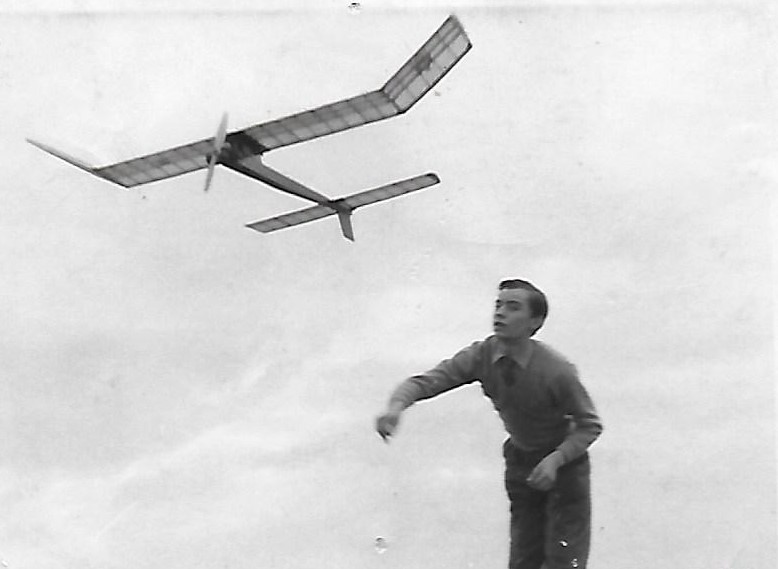
I came across a photo recently that brought back many memories of one of my teenage passions.

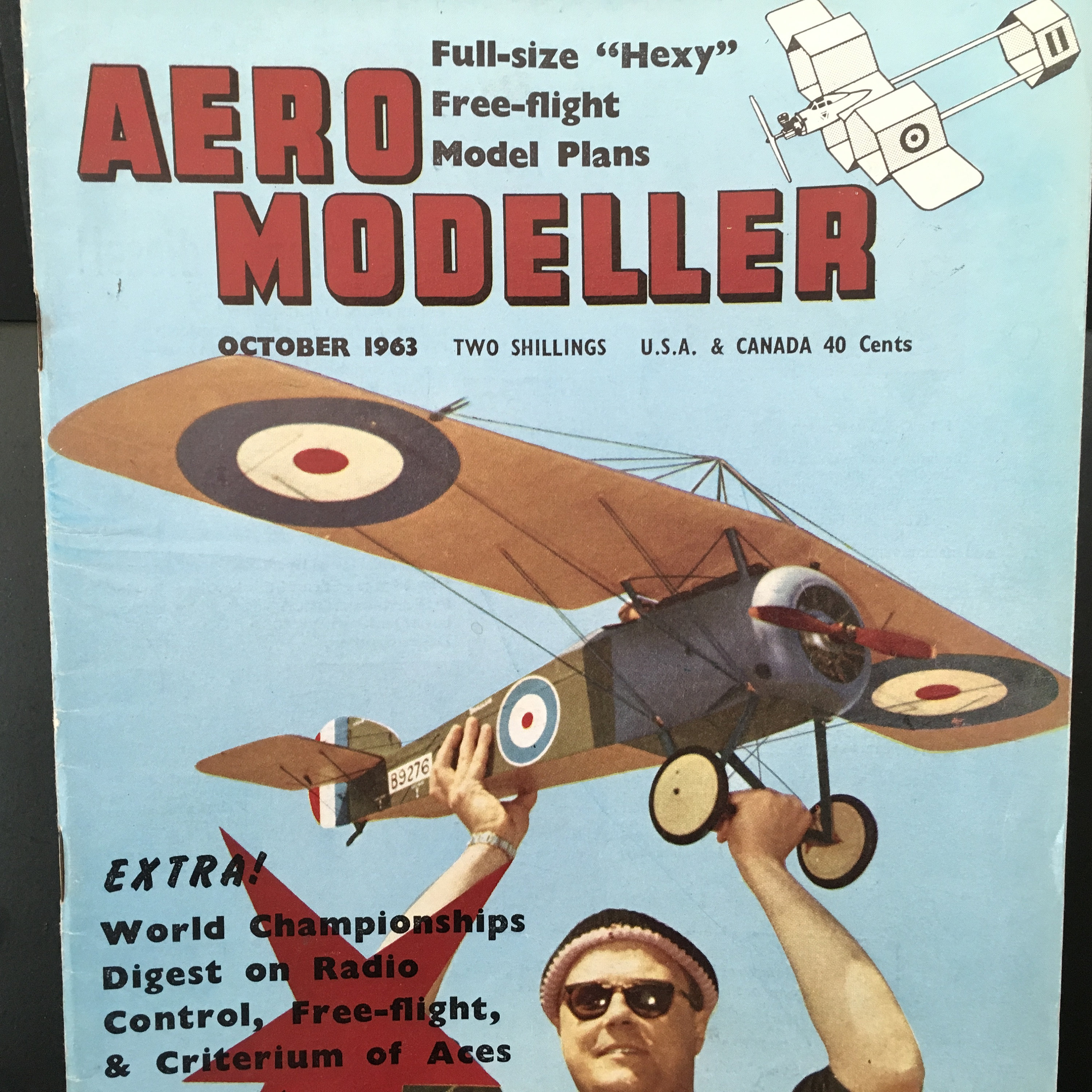
I think I was first introduced to the magic of flying model planes by my Dad – he was recuperating from two broken ankles and built a model glider from a kit. Then a beloved woodwork teacher at the high school I attended started a model building after school club when I was about thirteen. He and some of his adult friends went on to establish Dunfermline model aircraft club and rented an old empty house in a village just outside town. I joined that and could go there any time to work on my models or just hang out with my pals. We also shared copies of two popular specialist magazines – Aeromodeller and Model Aircraft.

We lived on the edge of town with fields right behind the house where I could test fly my planes, but the club had permission to fly on farmland further away. So most weekends when the weather allowed I would walk the thirty minutes to the clubhouse and then a further thirty minutes to the flying site.

Most years a group of us would rent or borrow a van and drive to the Scottish and British championships, although we rarely won anything.

I was most interested in two specialist types of planes – competition free flight and ½ A team racing. Free flight involved the model corkscrewing up vertically under power for 15 seconds and then gliding for as long as possible in circles. You were allowed three flights and if any exceeded three minutes that was termed a ‘max’. All those that got a full set of maxes went on to the next round and so on until you had a winner.

But there was one member of the club who was a few years older than me that became a big influence on me. He introduced me to jazz music and he was snappy dresser, so of course I became a snappy dresser too! Ian wasn’t interested in free flight; his passion was team racing. This involved planes flying very fast (80 – 100 mph) in a circle aiming to be first to finish. They were ‘control line’ models (U control in the US), with the pilot in the middle of a 100 foot circle holding a U shaped handle with two thin wires attached to the plane which controls the up and down movement. The models have a specified size, engine capacity and fuel tank capacity. Up to four planes fly simultaneously with all the pilots entwined round each other in the middle. I was the ‘pitman’ and my job was to refuel the racer and restart the engine while dodging the other ones flying over my head.

I continued as a member of the club until I was about twenty and over time there began to be quite an overlap between models, jazz and eventually folk music.

That link eventually re-emerged when I was booked to sing at Dunfermline folksong club about twelve years ago. My old high school woodwork teacher, George Simpson, was in the audience!

Many years later and after I retired and moved to the US I revisited my teenage passion and discovered that electric motors had taken over as well as cheap and easy radio control. Much less messy and much less likelihood of losing models – or breaking a finger with a back-firing diesel engine!