
The Farmer Feeds us All

The Monday book (on Tuesday) isn’t a book – it’s a recording – –

Jack is standing in for Wendy as she is ‘on the road’.

Into the Purple Valley – Ry Cooder

I got this back in the early 1970s when it first appeared as an LP and was completely blown away. We all have certain albums that constitute ‘milestones’ in our musical lives and this is definitely one of mine. I had never heard of Ry Cooder until a friend who already had this played it for me. I immediately got a copy of my own, I still have it and I still listen to it from time to time. But nothing can re-capture hearing it for the first time.

purple valley

The singing has a world-weary quality that perfectly suits the songs and the choice of songs conjures up rural America dealing with hard times. They come from a wide variety of sources ranging from Woody Guthrie to Leadbelly and Joseph Spence and all have been performed and recorded by lots of other people.  However, Ry Cooder through this wonderful album established ‘ownership’ of all these songs.

In the end, though it’s not the singing that makes this such a stand-out – it’s the arrangements and Cooder’s fabulous guitar playing.

My favorite tracks are Vigilante Man, The Farmer Feeds us All and Denomination Blues, but that’s just me – there’s not a dud on here!

Of course other albums followed this and there are great performances from concerts and TV shows on YouTube, but this was the beginning.

To get the full experience you should search out the original LP in good condition but failing that it’s been re-issued as a CD.

(Wendy will be surprised at my choice as the next Ry Cooder album after this has an Airstream on the cover!).
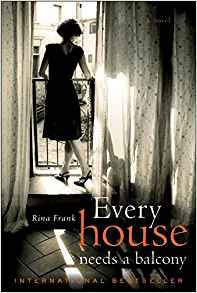
The Monday Book: EVERY HOUSE NEEDS A BALCONY by Rita Frank

This book came into the shop, and I’d seen somewhere online that it had been nicknamed “The Israeli Kite Runner.” So I took it downstairs to our flat and made it my bedside book.

Hmm….. on the one hand, it’s very atmospheric, makes you feel the Haifa poverty and inner city activity of the time period (post-WWII). On the other, translated books have that one-step-removed feel, and this novel has that in spades. It feels like reading from behind a curtain.

The story centers around a woman who decides to marry a guy from Barcelona, both Jewish, different classes, dealing with a lot of the ethnic and economic and political effects of the day. Marriage strains, sick babies, family members who aren’t cooperating, etc. If it weren’t for being set in Haifa, it would be an Aga Saga. But instead, it’s kind of an atmospheric time piece. Maybe even a peek behind the curtain.

I love character-driven books best of all, and this one isn’t. It’s setting-driven, and I have to admit that works really well. I didn’t care about the people, but it was like watching a television instead of reading in terms of the filled-in living details and little tossed-on-top nuggets of unexplained culture. It’s written from the inside, and those of us on the outside can learn a lot just from watching the casualness of the unexplained as it appears.

It’s not a book in which a lot happens action-wise, at least not most of the time, but it’s a great depiction of how time, place, and money can rock a marriage. Any marriage, any time, any place.

Four stars, shall we say?