Jack finally gets a Wednesday blog post up on time – – –
Back in the 1990s I was working as a middle manager in a local Scottish community college. I was head of construction crafts, and that department was fairly low in the pecking order. So I decided to find a focus for us that would boost our profile.
I had been interested in environmental topics for a while and did some research. That resulted in a series of projects funded by the EU and with partners all over Europe. The college senior management supported me and I traveled regularly from Belgium to Denmark and Germany and Italy and even eventually to Romania and Vietnam.

But I worried continually that I wasn’t always producing the educational outcomes that I had promised. It was many years later that I discovered that these were never the expected outcomes in the first place. It was always just about getting people from different countries and cultures to interact and talk to each other!
This brings me to the real point –
I discovered a few weeks ago that my hard-won US Citizenship can be arbitrarily taken from me at the drop of a hat and the whim of a faceless bureaucrat. This seems to mirror what’s going on in Britain right now as well. Not just there but all over the world there seems to be a resurgence of the fear of ‘the other’.
Of course I don’t expect to be deported any time soon. I’m not black or Hispanic. Not Mexican or Muslim. Not Catholic or Italian. Not Irish or Chinese. I’m a white guy from Scotland – – –
So come on folks. It’s time to put all this nonsense behind us. We inhabit a tiny dot in the universe and we need to look after each other – and that tiny dot too!
“There are some oddities in the perspective with which we see the world. The fact that we live at the bottom of a deep gravity well, on the surface of a gas covered planet going around a nuclear fireball 90 million miles away and think this to be normal is obviously some indication of how skewed our perspective tends to be, but we have done various things over intellectual history to slowly correct some of our misapprehensions.” – Douglas Adams
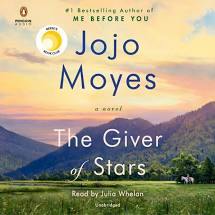 I received a copy of The Giver of Stars by Jojo Moyes for Christmas. I’m an Atlanta transplant, first having moved to Appalachia when I married – I’ve lived in southeast Kentucky and southwest Virginia, and it wasn’t hard to recognize both of these areas in the book.
 Wendy Welch: Books, Yarn, Cats, Opioids