
The Monday Book: CALL THE MIDWIFE by Jennifer Worth

Worth imageOne of the nicest things about vacationing in Scotland is that the books landing in charity shops there are completely different from here. I must have counted six copies of Gone Girl and two of Divergent.

Jack and I scored several titles, including one I’d intended to get to since enjoying the series on Netflix. Call the Midwife is actually part of a trilogy of books Jennifer Worth wrote; the others are Shadows of the Workhouse and Farewell to the East End. (She also did one on hospice nursing later.)

I enjoyed the books, but this is one of the few times I have to say watching the series first helped. I’m not up on 1950s and ’60s medical parlance or practice, and there are details in Worth’s writing that I wouldn’t have understood without seeing them played out in pictures first.

Worth tells her story in simple, straightforward ways. It isn’t her writing that’s attractive so much as the details she gives, her way of understanding how humans are feeling. One might be tempted to use the word “clunky” once or twice on certain passages. She died in 2011, just as the series based on her books was coming to TV. Not having had the chance to meet her, I suspect she’d have proven a great humanitarian rather than wordsmith.

Still, who cares, because the stories in Midwife are fascinating, compelling, and lovely to read after seeing them portrayed. Some were taken straight from the book, others embellished from mere hints and whispers she included in passing. A lot of her descriptions were taken care of with just a couple of camera shots.

Let me say it again: it is the stories and not the storytelling that makes this book a great read. It is a methodical and prosaic capture of a way of life now over: one feels the pavements, smells the odors, and shares the fears and happinesses. Worth writes like a camera takes pictures, presenting snapshots, no corners left dark.

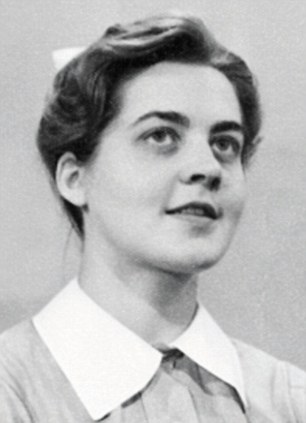
Worth’s life is in itself fascinating. She married in 1963 about ten years after she became a nurse, had two daughters, and left nursing in 1973 to teach piano and voice at a college. And she didn’t start writing until late in life. Midwife came out in 2002, and took five years to reach bestseller status.

Worth reminds me of another favorite book from a British author, The Gurnsey Literary and Potato Peel Pie Society. The older of its authors didn’t start writing in earnest until late in life; her book was also post-humous, and a bestseller, and took a snapshot of a terrifying yet exuberant time to be human.

Let that be a lesson to those of us who write; get going. Stories need to be told more than perfected. Think what else these woman could have given us if they’d started earlier.


Author Humiliation Contest Winning Entries

Our first winner is Suzan D. Herskowitz, an attorney from Winchester, VA.

Sometime in the late 1990s, I was asked to speak about my scintillating book, on writing your own will (yeah, I know, didn’t even make the top 1 million list for non-fiction). I showed up at a mega-bookstore that is still in business somewhere in South Florida and 1 person showed up…and it was my mother.

Thanks for letting me share.

And in equal first place is Steven Friedman, of San Rafael, California, whose entry is titled

Infamy

My first (and only) book was published in 2000 by a small press in South Carolina, owned by a bigger concern in England. Their marketing and sales team arranged for the book to be sold in a few large bookstores and even one notable big box store. But the responsibility for promoting Golden Memories of the San Francisco Bay Area was largely mine.

So I arranged a speaking engagement at a national book chain in Berkeley, CA, on December 7, a perfect day of history and infamy to showcase a book of oral histories from nine Bay area elders of varying ethnic and religious backgrounds.

It was a Thursday evening, rain slashing outside, as I arrived at the store. There was a 20×30 poster with a photograph of me on it, advertising my book talk, and I heard someone announce over the loudspeaker that tonight’s event was going to start in 30 minutes. I felt the chill of excitement.

There were probably ten rows of chairs and a podium in front. At 7 PM, there were two men, who I guessed to be homeless, dressed in torn overcoats, warming themselves away from the frigid late autumn air, seated in the middle of the room.

I had a copy of my book, which was filled with several yellow post-its, so I could read a few passages. I’d picked one from Berenice, who’d been a civilian during WWII, about how she’d kissed her then boyfriend, an officer, underneath the Golden Gate Bridge. And I’d picked a second story from a Japanese-American woman whose family owned a hotel in San Francisco’s Chinatown. Her husband had later served in the Army after Pearl Harbor and after being forced into an internment camp.

So I was ready to share history and discuss history on a day when we remember such a tragic time in America’s past.

I started talking with Karen, the author-events coordinator. She was, like me at the time, the parent of a toddler, so we exchanged war stories.

By 7:30, the two homeless guys had left and the room was empty. Karen and I kept talking and talking and talking. Until 8:30 when I decided to drive home. So I ambled out there door, carrying the poster of my ‘book talk’, and returned to my wife and sleeping son.

I was bummed out for sure, but I realized or rationalized later that why would anyone go out on a Thursday evening, a school and work night, in a downpour to hear an unknown author?

I’ve passed that bookstore in Northern California many times and have even been in there with family and friends. And I always tell them about my day of not actual infamy when I gave a book talk and nobody came. And they chuckle a bit, and so do I. But it still stings, too, even after 14 years.