We Happy Few, We Band of Booksellers

Sometimes the little guy does win. Or at least holds her own.

I’m not quite sure what’s happening with bookstores these days – small, independently owned bookstores, I mean; we can all see what’s happening to the giants; Amazon is closing them. But what I begin to suspect (okay, hope for and daydream about) is that we’re gaining ground.

Bookstores are magic places, but I don’t have to tell you that. The watering holes of like-minded souls, the gathering spot for the tribe, they come pretty close to sacred. And it seems to me that, like farmers markets ten years ago, small bookstores are entering a period of rejuvenation and revitalization, even as people decry their loss.  Readers have begun noticing how much more fun it is to shop with real people than online. Realization is dawning that—like breaded, fried fast food versus a slow-cooked home supper—faster and cheaper is not always better (and that the price difference might not be as high as one might think, either).

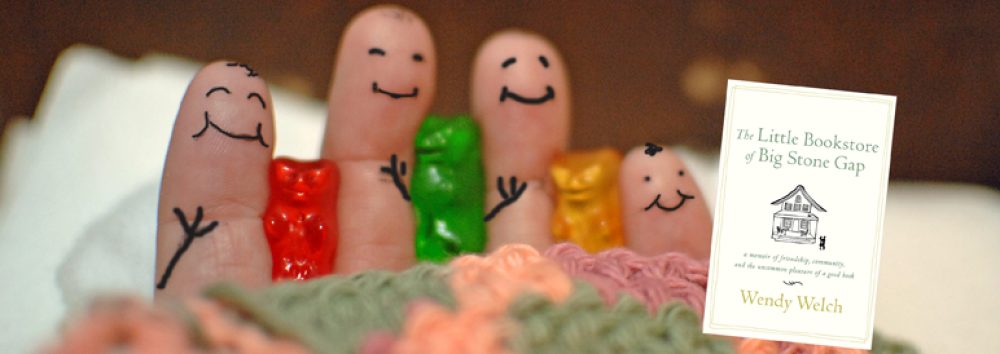
That’s why I wrote The Little Bookstore of Big Stone Gap: to celebrate this way of life that some proclaim dead or dying.  And that’s why I cried in the middle of Ann Patchett’s acceptance speech for “Most Engaging Author” at BookExpo America, when she recited the St. Crispin’s Day speech from Henry V while all these pictures of people who run bookstores flashed on the screen. Sweet people. People standing behind messy counters, in front of orderly shelves, hippies in scarves and skirts standing next to well-coiffed people in tailored suits, people who dress and think completely different from one another, arms entwined and smiling.

God love us, we are the ones who keep the barbarians from the gates. We keep a stall in the marketplace for stuff that lets people think for themselves. We take the financial risks of hand-selling things we think are good, even if they’re not commercially viable. We take trade-ins; we make staff pick shelves; we listen, listen, listen to our customers, and offer suggestions based on what they said, rather than who paid us for  a pop-up ad.

We can’t be bought, but boy-o can we sell.

I cried the whole time those pictures flashed. We are the little guys, the reeds still standing in the wind because we’re flexible, smart, and fast. What we do is so important: we help people think; we help them express themselves. And when they express themselves in particularly charming, compelling ways, we give other people a chance to hear those words that never will get made into movies.

What Ann Patchett and William Shakespeare say is true; sometimes the little guys win. Here’s tae us!

You-you-you Memoirs

I had a lot of people respond to my earlier list of memoirs, and to the idea that books are most interesting to read when they are about someone else, and you run through them like a pale thread, holding the warp and weave together rather than dominating the pattern.

And it’s always fun to talk about what I’ve been reading – something that bookstore owners rarely get to do, funnily enough – so here are some more memoirs that made for ripping good reads. I call them you-you-you memoirs because… well, okay, sorry, but the fastest way to get that pun is to read my prior blog entitled “Me-me-me Memoirs.”

The $64 Tomato. I liked it not just because the guy writing it is funny, but because it’s one of several books that encapsulates the growing interest of Americans in our food sources, in handiwork, in taking care of ourselves for ourselves. He’s neither preachy nor preening, just fun to read and insightful without hitting you over the head with his thoughts about what it means to live off the land while holding down a “real” job.

Second Wind. Actually, it cracks me up that I left this off my first list, because the author, Cami Ostman, has been my friend since we were 18years old. That’s why I left it off, in reality; it was too familiar, too much a part of the social fabric of my life. Cami introduced me to my agent, who sold my memoir The Little Bookstore of Big Stone Gap so quickly and so well. As with many things in our lives, she went first. (That’s an inside joke; her birthday is the day before mine.) Cami’s book is very much about her fights with herself, mentally and physically, as she goes through a divorce, takes up running, and reinvents herself. And when I read her book – which got national publicity in Oprah’s magazine, and great media reviews, and literally changed some people’s lives – what I hear is her writing a letter. It’s so Cami, I can’t see it as a book. But I’m glad that thousands of other readers can. And I suspect she’ll have the same reaction to my memoir when it comes out this October. (St. Martin’s Press is the publisher, in case you’re interested! I’m in that euphoric stage where I think the whole world is interested; don’t mind me.)

Truth and Beauty. Ann Patchett’s friendship with her fellow author and Iowa Writers’ workshop attender Lucy Grealy (Autobiography of a Face) has ripples for any writing friends, but it’s also just a lovely read about what it means to need someone, to love someone, when neither of you can be on your best behavior. How does competition enter, end, or endure in friendship? Patchett’s book explores this. Plus, she’s my new hero since she logic-ed Stephen Colbert into silence by explaining why independent bookstores are better than and will last despite Amazon. If you haven’t seen the clip, google their names. Priceless!