Jack gives Wendy an afternoon off to take a long, hot bath, and offers his impressions of the glorious charm that is Philly.
In the 1980s and early 1990s I toured around Europe with my folk-band Heritage and then, with my band mate George, branching into the States. The book tour on which Wendy and I are currently engaged has reminded me very much of those days: driving long miles between gigs, meeting lots of interesting and engaging folk, and swinging between fast food and gourmet meals. Last night we stepped slightly away from the book activities to give a house concert organized by Eileen and Ray, the friends we stayed with here in Philadelphia (in the wonderful and palatial house of their friends Jean and Pat). House concerts are a peculiarly American concept, and this one was well attended by folk who joined in every chorus with more enthusiasm than I’ve experienced in a long time (including the rather silly ‘Railway Porter’ and the infamous ‘Counting Backwards Song’ which some adults won’t sing because they always get the numbers wrong). ‘Twas a lovely night.
 This morning we discovered a real bookstore-owning character in the shape of Greg Williams of ‘Walk a Crooked Mile Books.’ The shop is half of an old train station and a gloriously riotous and ramshackle building on the historic register, with bookshelves stuffed everywhere you can imagine (including, to Wendy’s delight, the bathroom). Outside he has a ready-made amphitheater where he puts on frequent music events. Greg proved very willing to spend time chatting and comparing notes about the things bookstore owners tend to have in common: borderline poverty, endless boxes of donations, and the joyful exuberance of getting to run one.
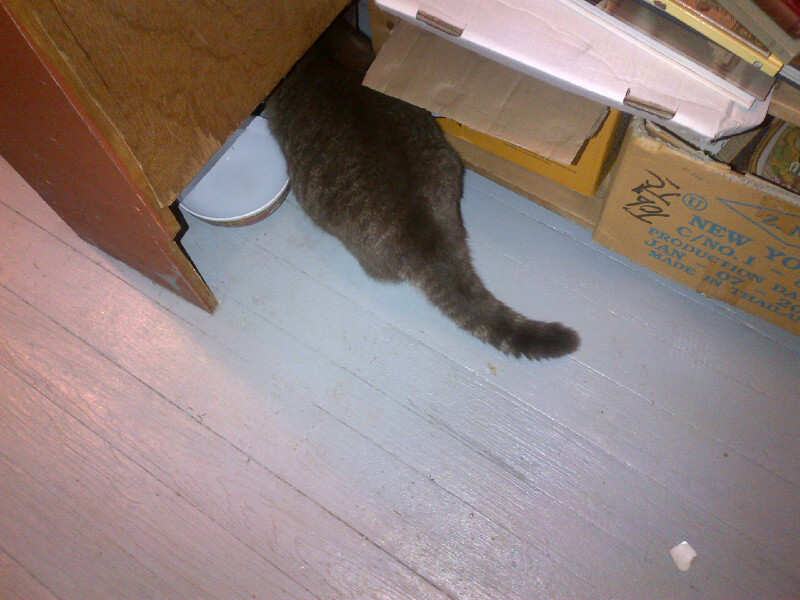
Crooked Mile’s staff cat Cici sat silent and plump at our feet during our discussion. Greg said she hadn’t so much applied for the job as created the position; she appeared one day “and that was that.”
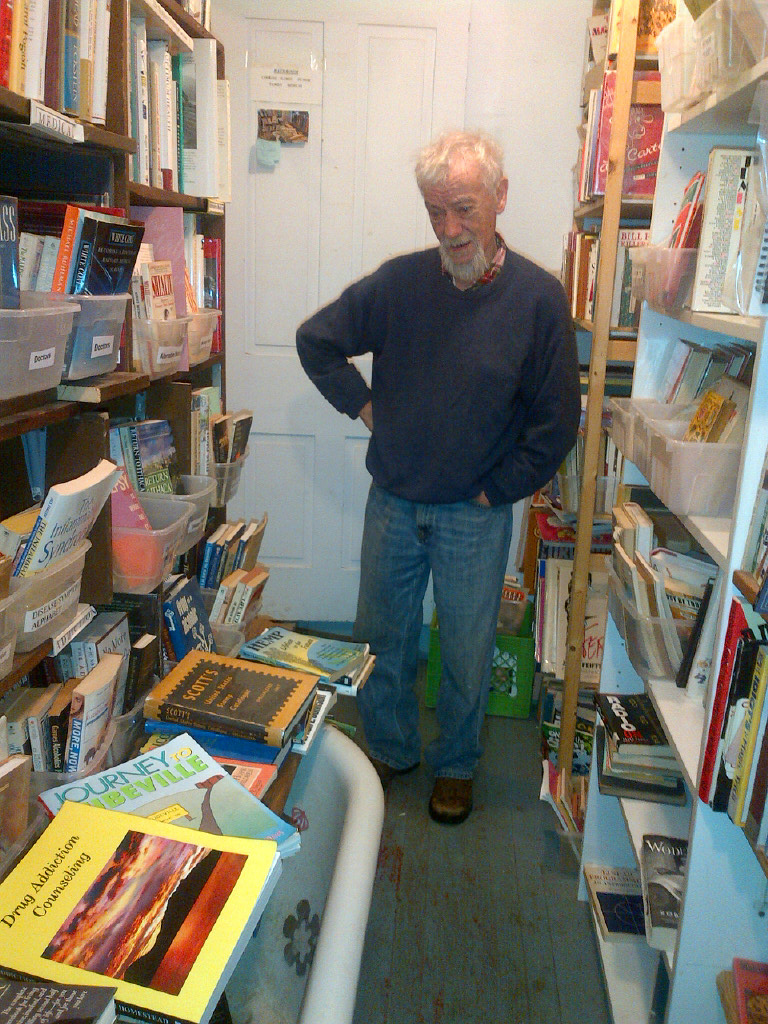 It is hard to convey the delight one feels at finding a kindred bookslinger. Greg is a shelf-building, free-thinking, problem-solving kind of guy with a long white beard and eyes crinkly with laugh lines. We started trading book questions: “Do you make people pay half in cash, or will you take all trade credit?” “What do you do with older paperback fiction?” “Do you ever get….” Etc. We did etc. for about an hour, until other customers entered and we said farewell.
Tomorrow we’ll tell you about our book signing at The Spiral Bookcase. Today, we bask in the glow of knowing there are other shops stuffed to the gills with the eternal library of human knowledge, run by bookslingers who know the value of what we contribute to the world.
BTW, Greg also writes a blog, which can be found at http://www.walkacrookedmilebooks.com
(Cici, the shop cat, proved camera shy. This is the best we could do.)
 Wendy Welch: Books, Yarn, Cats, Opioids