
When it becomes Personal

Appalachia is known as the epicenter of the substance use/opioid/painkiller/stopfightingaboutwhattocallitandjustfuckingfightitokay crisis. It has recently come home in a personal way.

Most of you know that Jack got very sick over the summer. And that we had someone working our property (mowing, cutting firewood, some garden assistance) in return for housing on some land we own out in the county. The land has a cute little home on it, and after a month of hiring this guy for money, and being pleased by his work ethic and his investment in his own sobriety, we invited him to live there in a rent-for-work deal.

Don’t think us naive; this guy was the protegee of a beloved friend who also believed in his personal investment in his own future. And we all know what happened, right?

Right. And included in what happened is what’s happening to the house. It is bad. So here we are, six months after the great start, with our house wrecked and a terrible need to evict him. We tried HARD not to evict him, because for someone with a felony, adding a court ordered eviction could result in losing freedom at worst, or means landlords won’t even consider him at best. All this we tried to say to his case manager, who turned out to be a 20-something drunk on the power of his own misinformation. That meeting resulted in this poor guy formally getting the court notification of eviction we had tried to avoid–and a formal complaint against the bumptious case worker.

Stuck doing something we don’t want to do to a nice guy when he’s in charge of himself, I am trying to sort some complicated feelings.

1) Was I naive to enter this agreement? The guy was so self-invested, so sensible. But he went back to work in a hotbed of drug activity, partly because entry jobs tend to be those kind of places, and partly because coming out of prison limits options. So the slow slide might have been inevitable unless I was willing to act not only as his landlord, but his dorm mom. I did not want to do that, and here we are.

2) What wrecks a promising, intelligent, kind-hearted human? This kid could not catch a break. Born from a forced sexual encounter, raised in what he described as a dealing family, unable to sit still in school long enough to complete an education, and never accountable other than punishment. Never rehab, only punishment. And so it goes. But I saw this guy, when Jack came home from the hospital with a bewildering, frightening collection of machines, tubes, and valves, take them from my shaking hands, and give Jack his first (and subsequent) nebulizer treatments. My friend who told me it would be safe to have him stay as our tenant had seen similar care of her elderly husband. This guy would have made the world’s greatest nurse.

3) Why do people who know what it did to them get out of substance use, then go back? I asked him once, did he miss anything from his former lifestyle. (Naive question: he was already back into it.) He said doing certain drugs made him feel like Einstein, his brain could work so fast and so well. And that the world was made for the strong to survive, which is why disagreements were settled with fists rather than talking things out.

4) What happens now? We all lose. He’s being evicted. He may or may not be in active use, but someone has been doing lines on the table at the county property. We are losing our winter help, which is the least of my concerns. We are watching a gifted, capable, competent human being choose all the things that are wrong for him, and because we evicted him, we are the enemy who cannot help further.

And so it goes. There is no one in Appalachia who has not been touched in a personal way by the substance use disorder crisis. But sometimes personal gets right down into your soul and lies there, burning. Because you can’t help.
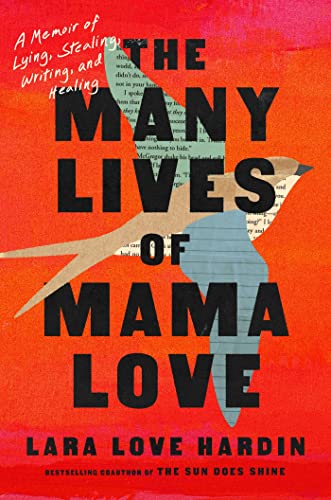
The Monday Book – The Many Lives of Mama Love: A Memoir of Lying, Stealing, Writing, and Healing by Lara Love Hardin

Guest review by Janelle Bailey, avid reader and always learning; sometimes substitute teaching, sometimes grandbabysitting, sometimes selling books

The Many Lives of Mama Love: A Memoir of Lying, Stealing, Writing, and Healing by Lara Love Hardin

The Many Lives of Mama Love: A Memoir of Lying, Stealing, Writing, and Healing by Lara Love Hardin

True story within…and confessions, as well, that had to be difficult to publicize. At least one member of our book club, which met recently to discuss this book, disliked the start of the book so much that she could not, would not read it through to the end and sent such word to our book club meeting, so troubled was she by the story of a woman who she saw as having wronged her children in this manner.

And yes, given the book’s subtitle and its chronological movement through these themes, getting through the “lying” and “stealing” portions of the book can be challenging. This is not easily an “unlikable” main character, nor a challenging or unreliable narrator. Given that this is Lara Love Hardin’s memoir, and she is telling her own story, this opening narrative had to be even tougher to write/confess/publicize, than it is to read it. And as a reader I did have similar feelings to my fellow book club member, initially, about the choices Hardin made: drug use and the ensuing horrible behaviors seemingly chosen over caring well or completely for her–their–children.

But I had to believe that since she’d also written the book and was telling her now published story, that I needed to keep reading through the “writing” and “healing” portions as well before I tried the book on the whole. Judging Hardin wholly and completely by what had to have been the most difficult part to publish and share seemed not fair. And I’d already purchased the book and selected it for book club, so I believed it worthy of the read.

Further, it is this difficult content and confession to bad parenting that make things challenging at the start. The writing, itself, and the storytelling, throughout, are of strong quality, due literary merit, even. This serves as testament to that MFA Hardin mentions early on and which she had previously earned. Additionally, I saw from the subtitle that the “writing” and “healing” portions of her memoir were yet to come.

I read the entire book in one day, traveling through the painful months and years of Lara Love Hardin’s storied life in just minutes to hours. Possibly in part because of that short duration of time and thinking spent in her space, and my reading style prompting me to live in it for the duration of my time with the book, I was better able to see through to the improved parts more quickly as well.

Hardin and her then husband were so caught up in their drug use that they had taken to stealing from others, both neighbors and strangers over time, to support their bad, bad habits. Their child together was in the worst spot, as each of them had ex-spouses with whom they shared custody for their others. Thankfully, when jail time for their crimes ensued, Hardin’s ex-husband and his wife took in Hardin’s son to be able to live with his brothers as well. That soothed some of the sharp edges of that part of the story.

From there we see inside the jail system–neither she nor her husband were sent to prison for a long haul–as they each spend months there, teaching us lots about what really goes on there and inside the walls. That also allowed us to learn how very difficult it is to ever get–let alone stay–out, once in, she and her husband not exactly on the same upward path toward recovery and quitting. Catch-22s and systematic challenges abound.

It is during this time of Hardin’s story that we not only learn of these difficulties from the inside but also discover where she gets her “Mama Love” name, using that ol’ MFA to help others write–and right–their own situations and stories among the good things she does while in and working her way out. She is most especially effective at helping incarcerated moms work toward reuniting with their children.

I need to stop telling you her–the–story, or I’ll take away the fun of all of the redeeming qualities of Hardin’s story and book, make it less meaningful for you to read and discover, experience it all yourself. That’s the point of reading a good book, right?

You may not, either, see the “Mama Love” goodness to Lara Love Hardin at her story’s start, but there’s a pretty good chance that your understanding of her and her plight may also grow into some forgiveness for her, too, for how hard she worked and for how much we can learn from her. And how much we may be able to do to help–rather than curtly judge or dismiss–someone working toward change when we meet them ourselves.

Come back next Monday for another book review!