
 My name is Wendy, and I’m a yarn hoarder [pauses for hellos from the assembly].
Not that this is a problem, mind. I enjoy my addiction. In fact, yarn has taught me many good things over the years, particularly about writing. The processes are similar: sit down, follow a thread, create a whole piece.
So here are a few pieces of wisdom that have found me during yarn meditations:
1) Every tangle – be it plot, wool, or life – has two entry points: the beginning, and the end. Find either one, and it will eventually lead you to the other. And help you untie your knots. And leave you with a nice little ball to play with.
2) While tension is required to hold a project together, knowing when to finesse with gentle fingers (or words) versus when to give a good hard yank, is important. Too much tension creates an impossible situation–remember that television series known as 24?–while too little leaves a shapeless messy mass. Enough tension to keep the needle (or pen) moving with surety, not so much that the project fights its own creation: that’s the way to do it.
 3) Cats do not help with the actual physical goal, but they sure are fun to have around during the work. Kids, too. Cuteness never hurts, and it lowers the blood pressure. Even if maybe you ought not let the cat or child actually write on any of the manuscript…. or play with the yarn.
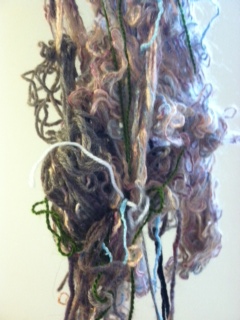 4) When dealing with a particularly large or vicious muddle, the first thing to do is separate out that which does not belong. Not everything in life is tied to everything else, even in Buddhism. Get rid of the bits that don’t contribute, and what you have left is a thread you can follow. Of course some projects are made of multiple colors and threads, but the time to weave them together is after they’ve been disentangled from each other and understood as themselves.
5) Don’t underestimate how much you’ve got to work with–or how fast words can pile up. Sure, kids, meals, day jobs, and the other stuff get in the way, but when you pick up your project–be it knitting needles, or nouns and verbs–just give it a few rows and don’t worry about speed. When you look back from the far end, you’ll be surprised at what those little bits and pieces of time and effort added up to, over the long haul.
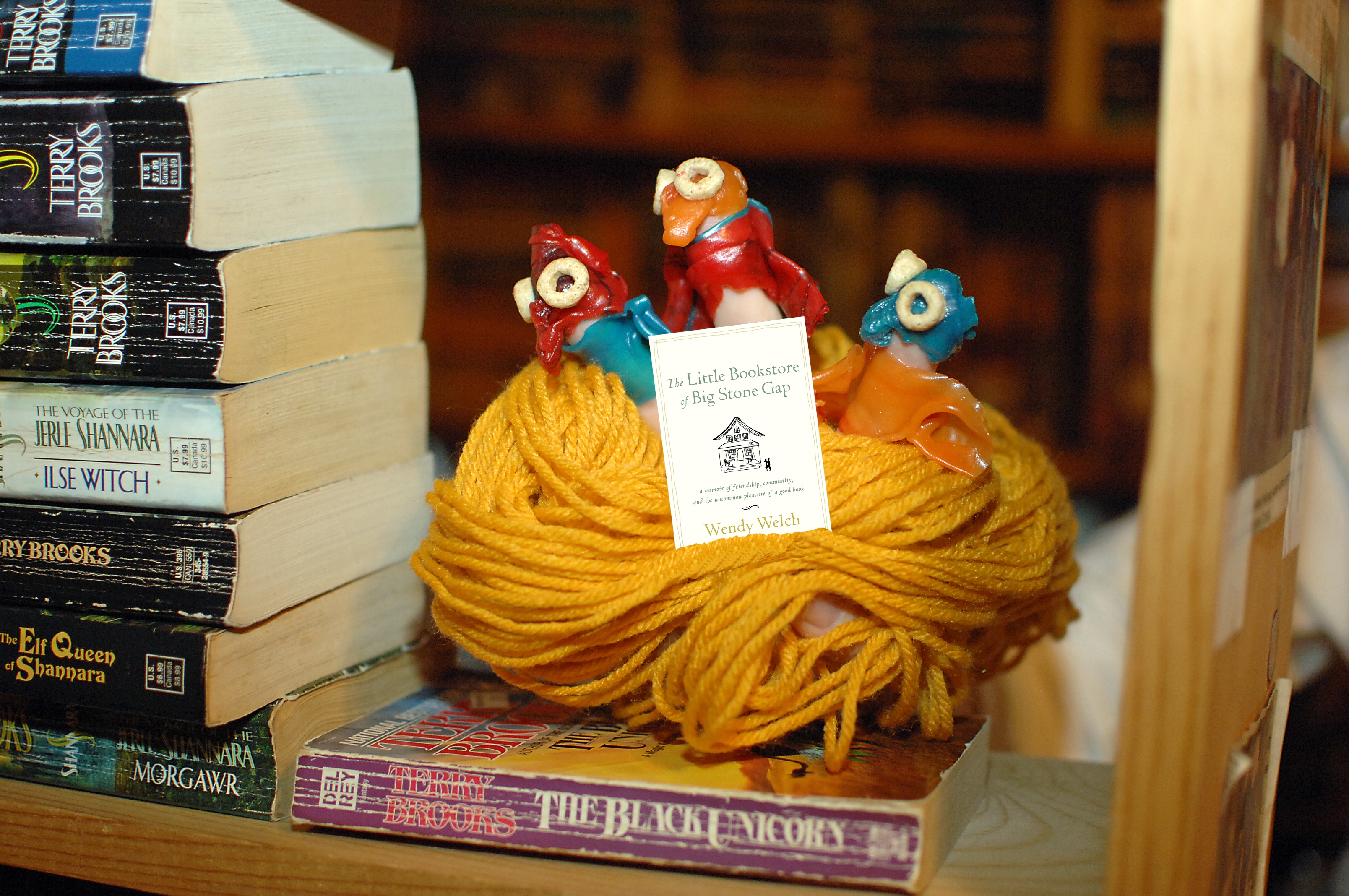 6) Have fun. Joyless crocheting is like joyless writing: dull, misshapen and lumpy. You’re doing something cool. Disappear into it. Dive deep. Tangle and disentangle, sing the colors, swing those needles, and drink wine–or diet coke. It’s your project. Do what you want!
 Wendy Welch: Books, Yarn, Cats, Opioids