
TS Eliot in Mexico

T.S. Eliot wrote my all-time favorite poem, The Love Song of J Alfred Prufrock. (In fact, it’s one of a handful of poems I Iike; I’m just not into poetry.)

Returning from Mexico, it was another Eliot piece on my mind, though: “We shall not cease from exploration. And the end of all our exploring will be to arrive where we started and know the place for the first time.” It’s from Little Giddings, and the quote gets lifted all the time from its context. Eliot was kinda wrapping up his career at this point; he’d been sick, World War II was raging, and he was simultaneously taking stock of himself and humanity.

Which is what the Wayfaring Writers trip to Mexico did for me. I reconnected, plugged back in, found some words, found some ways forward, sold a book (out in 2025, more forthcoming once we’ve finished the work), and took stock.

Mexico is a good place to do stock-taking. The pace is slower, the connections to its roots longer. It reminded me a little of Appalachia, except the whole country is more connected to itself. It’s an old, old country; they hold onto things, complex simultaneous concepts, and the examination of said complexities doesn’t seem to be rocking their foundations quite the way it is here in the States.

We were sitting in the courtyard of a private house in a small village not far from Oaxaca City, learning to cook a traditional meal from scratch. We roasted cocoa beans, pounded avocado and grasshoppers together, rolled tortillas, went to the community mill. And as we sat in the courtyard, enjoying our communal lunch, one of the hosts said, “this is the real Mexico. Who needs Cancun when you can have this?” He gestured at the expansive blue sky, the distant green mountains, the gold-green-grey near fields, now fallow for winter and parched in the dry season, an occasional cactus flower dotting bright yellow or blue into the scene.

I was telling a friend about washing dishes in the open sink in the courtyard, and my awareness of the difference between “charming” the first few times and “hard work” that would likely come after a thousand or so of such washings. Water is rationed in Mexico, although Oaxaca has a good water table and most private homes, like this one, have wells. Still, the washers were careful with water: clean without waste.

My friend said “it would take so much longer that way,” and I thought, not longer, more different value on time use. That’s kind of the way Mexico does things. They’re not trying to stuff so much in that they need to shortcut some of the simple stuff, the zen moments. When the women who had taught us to cook did the dishes, it took two of them about fifteen minutes and they rattled non-stop conversation in Zapotec punctuated with laughter.

Doing dishes is about having clean dishes, sure; but it’s also about the fifteen minutes you spend laughing with a friend. It’s not taking longer; it’s a different set of things than we value in the States.

Since coming home, I’ve found myself on the Mexican mindset. There’s time, this can happen later, this can happen sooner, everything doesn’t have to happen all at once. Enjoy the moment; it’s not just about finishing, it’s about the doing.

I like having a dishwasher. But I also like having friends to laugh with. When it’s all “faster, harder, more” to accomplish something lasting here in the US ethos, fifteen minutes might seem like a waste of time that could be spent answering emails, sending texts, editing a chapter’s punctuation. But it sure didn’t look like anything was getting wasted, watching those two women get it done, laughing all the way.
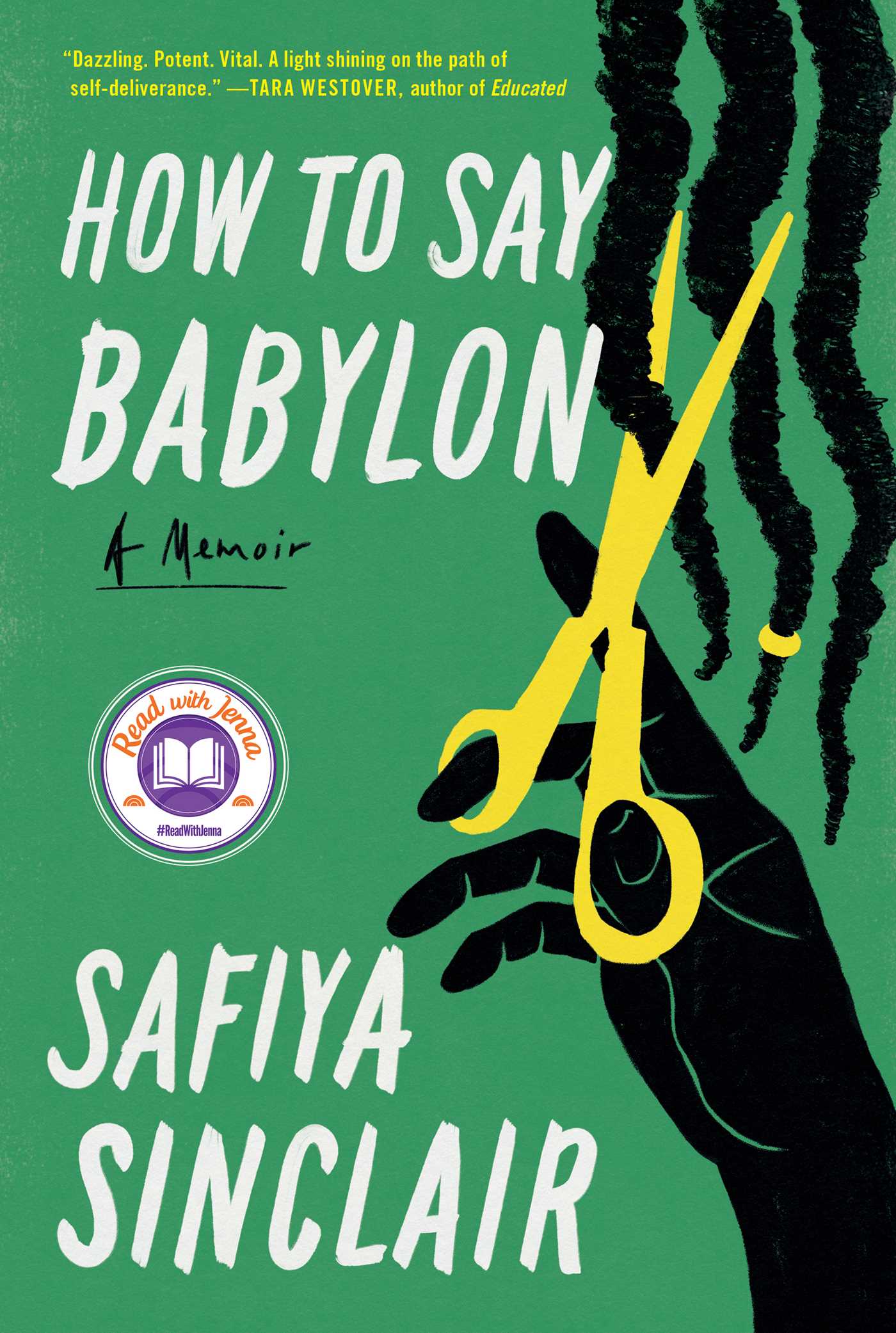
The Monday Book – How to Say Babylon by Safiya Sinclair

Guest review by Janelle Bailey, avid reader and always learning; sometimes substitute teaching, sometimes grandbabysitting, sometimes selling books

How to Say Babylon by Safiya Sinclair

How to Say Babylon by Safiya Sinclair

Who or what prompted me to add this book to my hold list at the library…I have no clear recollection, but once again the book I needed to read right then came to me in some sparkly wonderful “other”-driven way and beyond the fact that it was “due” back next.

In this case the thing you need to know is that all I have wanted for Valentine’s Day and for a long time was to see the movie One Love, the story of Bob Marley, coming out that day. This book, How to Say Babylon, which I started reading the weekend before and having no idea, prior, what it was about, is Safiya Sinclair’s memoir and all about her childhood and upbringing in Jamaica, her little family very strictly ruled by her Rastafari father. And without having any idea that I needed or wanted it to, it so conveniently provided a wealth of relevant background to the Rastafari culture her father a Bob Marley fan and follower in crazy similar ways.

But again, I did not have any idea that was even what this book was about until I started reading it. Sinclair’s father not only also lived the Rastafarian–a devout and rigid mix of religion and culture, following and built from the idea that Haile Selassie, Ethiopian emperor, coronated in 1930, was divine. Like Bob Marley, as well, Sinclair’s father fully lived the Rastafarian way and also made his living as a musician throughout Jamaica and its resorts, gone from home for long periods of time, and his brilliant wife, Sinclair’s mother, doing her best by the children–and many children–in excellently educational ways.

Safiya Sinclair is an amazing woman, quite clearly. She is a “survivor” of the very same situation likely intended to nurture and raise her by the standards in which her father wholeheartedly believed. Her memoir addresses her discovery, throughout her childhood and into adulthood, of all of the ways in which her father may have believed he was doing “right,” though often wronging her and her siblings in a number of ways. He disrespected them all, regularly, at the very least. And she is amazing because she did not merely survive that; she worked through and detangled more than dreadlocks in finding an adult relationship with her father. I won’t spoil a thing about what all happens in between. It’s a complex, very well-written story.

Sinclair somehow, despite all of this “from home” working against her, was strengthened from the inside to believe in herself and find her way through all of it. She found her voice as a poet, a very young poet, and then was finally able to remove herself from that situation and all of the ways in which it silenced her. And she thrived…right into writing this complex memoir.

And it’s not just that she tells an important story–her own–but that this is also an extremely well written book, engaging in its storytelling and motifs and themes, as well as a success story building through the difficulties of being raised by someone whose truths are not so valuable for all involved.

Sinclair is, here, a voice for many as she conveys so clearly the challenge and complexities that can be present in many a father-daughter relationship., as well as specific to her own. The pedestal upon which daughters place dads…and then the challenge that it can be to communicate authentically…is an age-old one. The stories she tells are specific to her experiences with her father, but the feelings she so clearly conveys may fit many additional readers in a more general sense.

I highly recommend the reading of this book.

Come back next Monday for another book review!