
Get the Lead Out

Eating dinner off my mismatched-and-pretty thrift store plates, their decorated rims rich with flowers and birds, I read an article about Corelle/Corning saying everything made before 2006 should be considered “decorative” because of lead and cadmium content.

It’s easy to go down a rabbit hole of health misinformation. I write and speak about this for a living: rural rage, deliberate astroturfing, politically misguided truthiness to let ends justify means. But when I looked down at the design on my plate, rated at 48,000 parts per million of lead (safe is 90 ppm) something in me snapped.

If the offices designed to keep us safe want our trust, could they please do their damn jobs? (Waving at you, Food and Drug Administration.) Lead regulations went into effect in 1971; they just didn’t get enforced until 2006. The plates my family used growing up, the plates my parents use now: both patterns were in the “nothing to see here, we didn’t do anything wrong, just use these pretty plates as non-food pieces” information put out by their makers.

Jack and I grow or buy about half our food locally. We pay attention to the contents of processed edibles. To look down at my backyard salad and see that poisonous design filled me with rage. You’re doing everything right, and then it’s wrong at the literal foundation.

I sought advice from a colleague at a national public health organization, who said, “Oh we’ve had a buy-back program for ages, for people who discover they have lead dishes. It got defunded during the pandemic.” Another healthcare provider, mother of a small child, smiled. “You’re just discovering this because you don’t have kids. I’ve been reading leadfree mama since the day I got pregnant. It’s a nightmare out there.”

Indeed it is. Tamara Rubin, the leadfree mama website operator, is the most hated woman in thrift store history. While many of us scour secondhand places trying to find antique pyrex, she’s putting up their lead content (look it up, you don’t want to know, though) and getting hate mail.

Trying to find dishes without lead content provided a freaking nightmare for my mother, sister, and me. Following advice from those fully versed on the issue is tricky: no melamine; avoid bright reds, oranges, yellow; if the design is raised, big red flag. Best bet? Glass. Just pure, plain glass.

Glass dishes may be safe, but they’re boring and Mom wasn’t having it. “Find me something pretty and safe.”

My sister and I scoured thrift stores and managed to find six plates and four bowls from different patterns rated safe—and their blues matched. Everyone else in the store thought we were crazy, as I searched sites, calling back numbers as Tracy read info from plate bottoms. We finally pulled together a 4-piece whole group from stoneware and vitrified glass for $20.

My favorite from the thrift haul

It’s almost impossible to follow the maze of advice on which patterns from what companies work. Exhausted from doing our best, listening to Tracy detail the dishes she would have to retire from her kitchen and what was she going to replace them with, I looked down and saw a stack of glass plates, 50 cents each. Scattered along the same shelf, 11 clear glass mugs in three different designs. We bought them all and split them between us.

“Let’s stop thinking about this now,” I said. “There are better things to worry about.”

“Like having ugly dishes and seeing how much milk you put in your coffee,” she said, eyeing the mugs.

But at least we got the lead out. If only figuring out how to keep our families healthy were as transparent as glass.
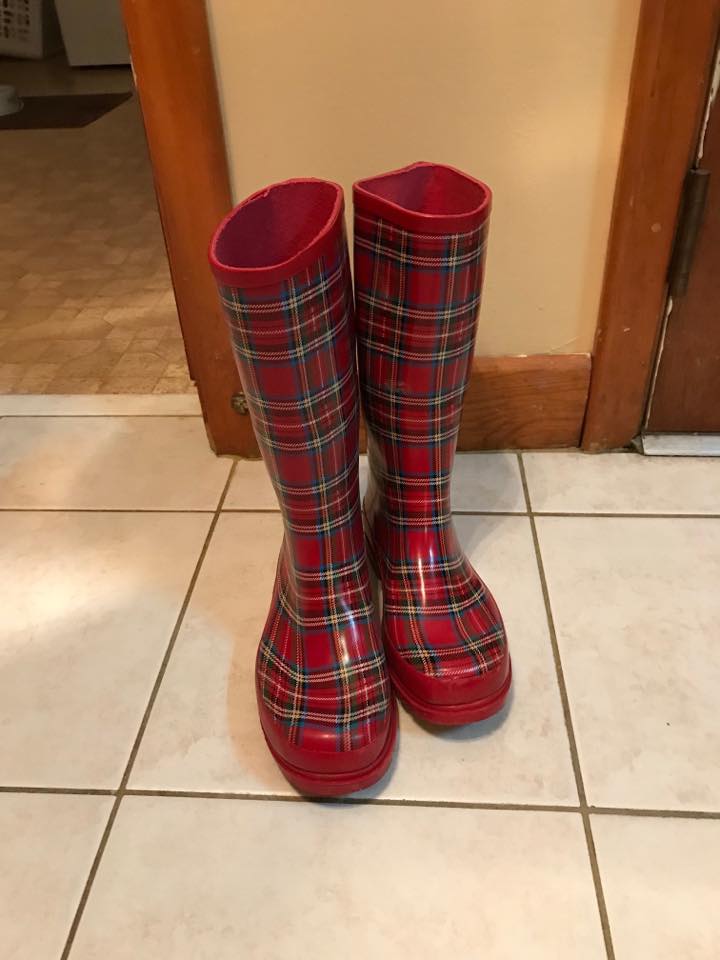
These Boots were made for Writing?

26943464_1870425129635209_1410684589_nAbout this time last year, my friend Cami Ostman and I were tucked up four days near Naples, Florida. We’ve been friends since we were about 18, and writing buddies about ten years.

When I sold my writing cabin in Tennessee, we lamented that our usual retreat couldn’t happen, holed up with pre-made casseroles and wine, knocking out our latest narratives and reading them to each other to smooth the rough edges. Cami and I both find that drafting a book’s bones is best done in an intense huddle of anti-social time hoarding. To everything there is a season, and when writing time gets smooshed between all the other pulls of normal life, it gravitates toward the back burner. Better to start the year with a dedicated blast, upping the stakes to keep going.

Cami wondered it it were a plot for a horror novel when I sent her this message: “I’m sure there’s some nice person out there who’s read one of your books or mine, who’s got a she-shed or a rental property we could borrow for a week. Lemme ask.” But the response from Cynthia Piwowarczyk and her husband Jim sounded like heaven. She was a voice-over actor, he director of a non-profit. Two spare bedrooms, a pool in the backyard, a few blocks from a running trail around a lake, and don’t bring any wine or snacks because her husband’s job meant he had about a hundred gift basket items left over from Christmas, and they didn’t drink.

Cami messaged me: either this is set-up for the scariest movie ever, or we just hit the jackpot. Indeed we had. The worst moment of that time with the sweetest, smartest couple in the world was trying to spell their last name on the thank-you card.

We followed our usual pattern: three days of intense writing, emerging evenings to socialize (read: drink wine) and chat with the couple. And then a day of gleeful reward: Cynthia took us to the beach for the morning, and arranged to meet us in the afternoon for girl time. We got frozen ice juices, we ate crepes, we went shopping.

Cynthia and I shared a penchant for thrift stores, so left Cami in a cafe with her laptop to careen through a few big places, chatting and impulse buying and talking each other into and out of silly things.

Mindful that I’d flown with hand luggage, when I first saw the boots, I passed. But Cynthia had a good eye. The second time she saw me glancing back, she asked, “What? Those plaid waders?”

My guilty secret came out: I’d always wanted a pair of decorative gum boots, Scottie dogs or polka dots or some such. Cyndi studied the red and yellow lines of the pattern. “I don’t think it gets any more decorative than this, dear.”

So I flew home from Florida with second-hand knee-high rubber boots stuffed into my bag, dirty knickers stuffed into the boots. Security waved me through after one disgusted look. The officer changed her gloves.

And for a year, those boots sat in the back of my closet, because winter was mild and summer was dry in Southwest Virginia. They survived several closet purges and a Maria Kondo phase, because they brought me joy. Even if I never wore them, now I had a pair of cool hipster knee-highs.

Fast forward to the invitation to be writer in residence in Fayette, West Virginia from January-March of this year. As David, a long-time friend said, “You want to go where, WHEN?!”

I arrived when the weather had reached -4 just from temperature, windchill dropping it another few degrees. People were warned about freezing times of exposed flesh. No one was driving–except Amy and Shawn, owners of the flat that sponsored the residency. They took me on a scenic tour of the New River Gorge in their jeep. Nobody out there but us and one lone runner we encountered at the bottom. He stared at us like we were crazy.

And for the next three weeks, any time I stepped outside the apartment, I needed the boots. At last. I packed them more as a memento of the previous year’s week of glorious productivity, but also they were the only weather-proof shoes I owned. I tend to be a minimalist footwear girl.

So I guess these boots are now a connective theme. Next year, if I get the residency I’ve applied for in Yellowknife (yes, in the cold part of Canada) they’ll get use again. Meanwhile, they’ll sit in the back of my closet, a reminder that, to everything there is a season.