
The Monday Book – Trust by Hernan Diaz

Guest review by Janelle Bailey, avid reader and always learning; sometimes substitute teaching, sometimes grandbabysitting, sometimes selling books

Trust by Hernan Diaz
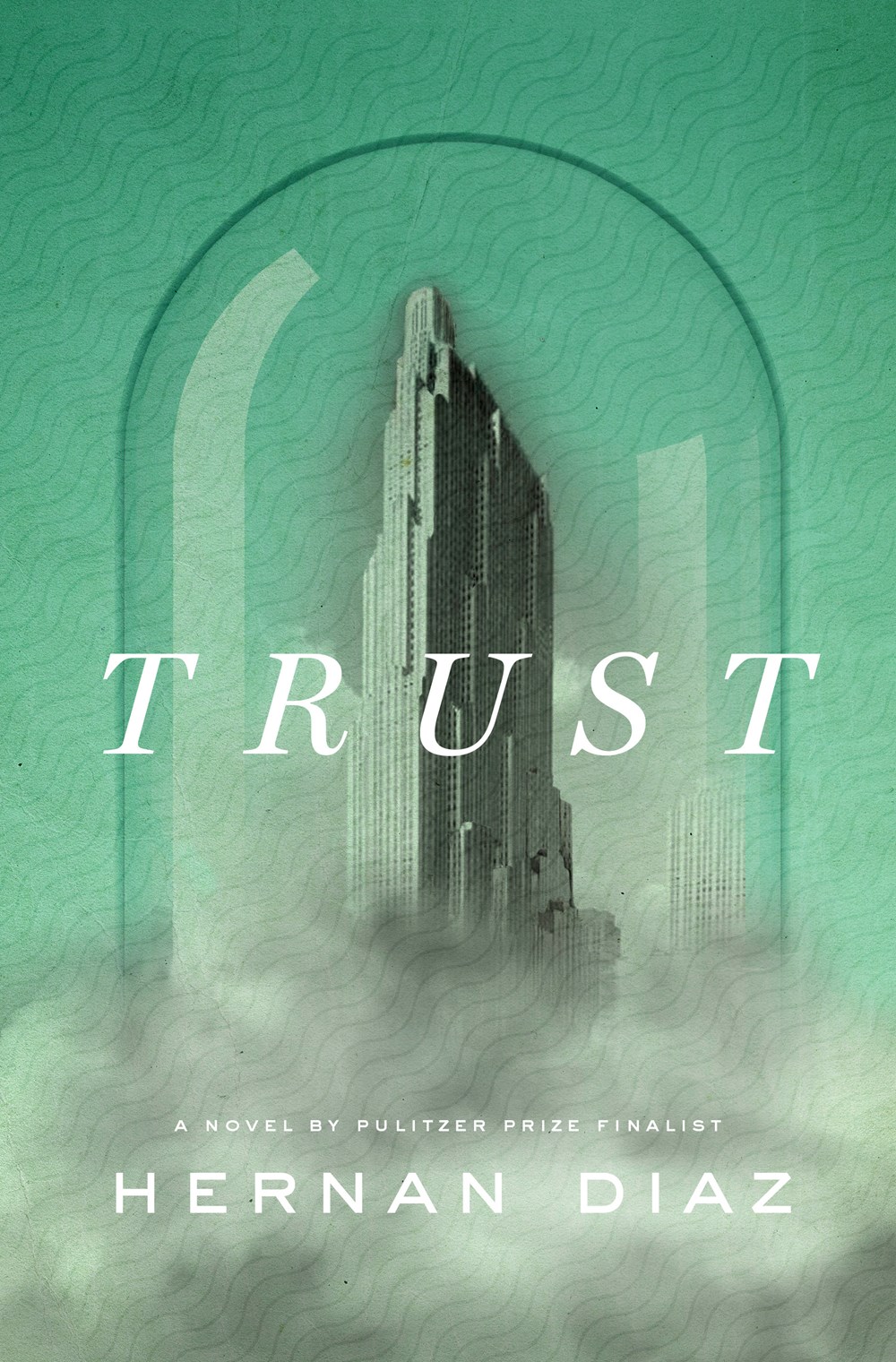
Trust by Hernan Diaz

It is difficult to write, for this book, a review that includes any kind of sweeping generalized summary, as a reader needs to experience it all as it unfolds to appreciate its layers and all that they share. This is a multi-genre, telling of financial industry history and the players who played, seemingly fictitiously but compellingly believable as well.

These characters’ interwoven stories and history over time is what makes the book all that it is. And it was a common theme to our book club discussion of it, recently, that many of us plan to go back and re-read it again for only knowing at the very end how some parts truly fit and wishing to re-connect things back to front again. I have long intended to make that my practice with some of the best books…but too often I finish the book, write the review, and close it…so eager to dig into the next, rather than read again the one I have just finished. For years I advocated students returning to the beginning once they had finished. In the best literature, the opening paragraph, even, or page of a book often foreshadows all that is to come from the entire work, ultimately, a fun thing for them to see play out. I have not, as often as I should, taken my own direction or advice.

In the case of Trust, the supremely valuable and multi-meaningful single word title is layers of impactful; the book is about “trust” as a financial industry term, as well as how one builds “it,” how one values a story and or can depend upon other persons’ perspectives and telling of story and/or history–or their interpretations–as well as what separates fact from fiction. I eagerly entertain a conversation with others about this single word–trust–and how it varyingly functions in the book, wishing to ponder and analyze how it plays into many aspects of the novel’s content, how it threads everything together but differently as well as similarly. If I were still teaching AP English Literature, I would relish the opportunity to discuss this with kids, as well as then challenge them to think of other words that are so multiplied in meaning, singularly, themselves singularly containing the layers we demand of the best literature.

There is no easy way to convey a list of meaningful or impactful characters in this book for that multi-genre, nearly Cloud Atlas-like conveyance, but it is easy to convey my fondness, most of all, for Ida Partenza and Mildred Bevel and their stories. I think you’ll find them to matter much when you meet them.

I wish to read this one again from cover to cover…and will. I first picked it up months ago, having put it on hold at the library due to its winning the Pulitzer Prize. When it came to me I only got halfway through before having to return it to the library. Then it became our book club selection, and I was thick into another thick book, finishing that only two days before book club met. So rather than returning to the beginning of Trust to start over, as I had intended and also knew I “should,” I was forced to pop in closer to where I’d left off, which was about halfway through, and still did not quite finish in time for book club. I had 20 pages remaining when we met.

And that could all make it sound like the book is not as wonderful as it is. It is deserving of the prize it won, and I am eager to read it all again.

And fully realizing I didn’t tell “you” much at all of what it is about, that is because as Janie said back in Zora Neale Hurston’s Their Eyes Were Watching God, “You got ta go there to know there” and find your own way through its valuable layers of understanding.

Come back next Monday for another book review!

My Favorite Proverbs

Quotes and proverbs are not quite the same thing, true. So technically this should be called “My Favorite Quotes.” But hey, feeling lazy today.

Not every quote is awesome, of course….

I love quotes, have collected them all my life in a small notebook (I’m on the third one now) and find them to be pithy summations of so many situations that fit their boiled-down wisdom. They’re like the opposite of soundbites; quotes can unpack into massive discussions, but they remain the word pictures worth a thousand words. So here are a few of my favorites:

Utopia is just a massacre away. –unattributed

I first saw this in the decorated calligraphy of a friend who sold his art as a side hustle. It’s not so much a literary quote directly as a distillation of Thomas More’s Utopia written 500 years ago now, and still relevant. In our strange times, I have seen more people on both sides of any sides that can be had these days dehumanizing others to the point of “just get rid of them and the rest of us will be fine.” This was particularly a combination of amusing and horrifying in a pro-life discussion among Christian friends. Kill the Democrats, and we can have a pro-life regime.

Uhhhhhh….. does anyone else see something wrong with that reasoning? Just asking: what would Jesus do?

“I’ve learned that people will forget what you said, people will forget what you did, but people will never forget how you made them feel.” –Maya Angelou

And how. I find myself examining discussions to avoid wanting to be right, and instead wanting to be sure people have information, and emotional support. We recently finished working on the COVID CONSPIRACIES book and the final chapter is all about how to keep friends while losing emotional baggage from their high-energy demands to fight over ideas. Unfounded information should be challenged, yes, but if this is someone you want to keep, consider the long game. And I’m not buying the increasing calls from people I don’t know to abandon my family for the sake of any cause, including the unmeasured calls for equal rights. It’s not equal rights if I have to stop talking to my mom, ‘kay? Let us work this out with our home teams without having to bite their heads off. We love them. And we never forget how we made each other feel, long after we forget the passionately reasoned Magnum Opus posted on Facebook for none to read past the first paragraph. Think carefully about what we make each other feel, because we will be wearing it when the pendulum swings again.

It is easy to get a thing, difficult to keep it. –Israeli Proverb

I’m not actually thinking about that pesky election here. I’m thinking about pendulum swings. What goes up must come down. A beloved storyteller I know named Elizabeth Ellis tells a story called Maybe It Is, Maybe It Isn’t in which everything that seemed like misfortune turned fortuitous, and vice versa. Such is life. The pendulum keeps swinging. Perhaps it is more important to be the kind of person Angelou describes above than the kind who puts all her eggs in a basket that will tip when the pendulum swings again. Perhaps being kind builds stability? And this quote is related to both Angelou’s and my last one:

A body makes its own luck. — Ma, Little House on the Prairie

This proverb is in many forms, and has had many people take it up (if you like quotes, Google “luck” and Hunter Thompson and Mark Twain). But that’s the first source where I saw it, and even at seven or eight years old, it stuck with me. At first, I think it stuck because I didn’t understand it. Then it became clear, watching the behavior of people in forming and breaking relationships. Luck is when opportunity meets preparation. Luck is being ready for your moment, and really getting one. And luck is other people, in most cases. So we go back to how we treat each other having consequences. Most of the quotes I love tend to center on that, oddly enough. Maybe because I’m not very people-savvy and need a lot of help from books.

So those are my favorites, and I hope they help inform your life as they have mine