
The first time I got this book was from my editor, Nichole Argyres, as a present. While visiting in 2012, she saw me grazing her NYC office shelves and asked what looked good. I pointed to Global Girlfriends, and her face lit up.
“It’s a great story, so inspiring, and really worth telling,” she said, thrusting the book at me. I planned to read Global Girlfriends after leaving NYC, but we went straight to an event in Northern Virginia, where the lovely and accomplished Carolyn Frahm had invited me to speak to her book club about my newly-published memoir. While there, she saw Global Girlfriends in my bag and asked if I was enjoying it. Carolyn’s book club was comprised of women who looked for ways to use their financial well-being to help others–the hosting house’s daughter was recently back from Pakistan, where she and her husband ran a clinic for pregnant women–so I gave Carolyn the book. I’d only read the opening chapter, but some books are just meant to be in the hands of certain people at the right time.
This year, visiting Nichole’s office again, I told her how I’d “lost” Global Girlfriends and asked her if she had another copy. Her face lit up again. “It’s such an important story,” she said, scanning her shelves. “Ah. Here. This is a book I’m really proud of.”
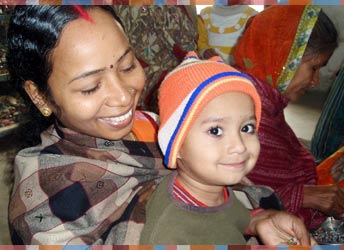 With good reason. Edgar tells the story of how she took a $2,000 tax return and leveraged it into a for-profit company dealing in fair trade goods crafted by women in disadvantaged countries. The story of creating her enterprise is bounded ’round by short stories of the women she works with internationally.
Think of a mirror in a hand-crafted frame, each shiny stone set as part of a pattern into gilt. That’s pretty much what this book is like; each story is self-contained but collectively they reflect back what GG does. And the central story reflects “us”: that is, women of comfortable lifestyles in a wealthy nation. The side stories reflect the lives of women we could have been, had we been born in another country. One of the nicest elements of this book is that it neatly sidesteps that “poor unfortunate souls” crap so many “welfare” programs unwittingly propagate. Stacey talks about looking at begging girls in India, and seeing her two daughters; holding meetings with administrators in run-down offices, and seeing in them her friends, the sisterhood of women who cope with what life throws at them.
There’s an interesting life theory that social workers–Edgar is trained as one–often come up against (as do public health workers, ministers, and just about everyone else; we just don’t name it). The JUST WORLD THEORY says basically that if something’s gone really badly for someone, it must be because they deserve it; blame the victim, for letting themselves become a victim.
We don’t need to talk about the arguments against that theory; Edgar pretty much smashes them without a backward glance as she describes each country more through the lives of the women than the stats that she tosses casually into the narrative.
People interested in social justice, or in the mysterious ways in which women form bonds where men tend to create wars, will love this book. I’m not sure others will be able to sink their teeth into it. It doesn’t start with “why,” but “how.”
I’m very glad, now, for losing my first copy and gaining this second one. Thanks Nichole for getting this story out there, and thanks Stacey Edgar for writing it.
And if you want to go buy something from Global Girlfriends – the women they work with make incredibly beautiful and sturdy items, avoiding what Edgar tactfully calls “the carved giraffe dilemma”- here’s their online store:
 Wendy Welch: Books, Yarn, Cats, Opioids