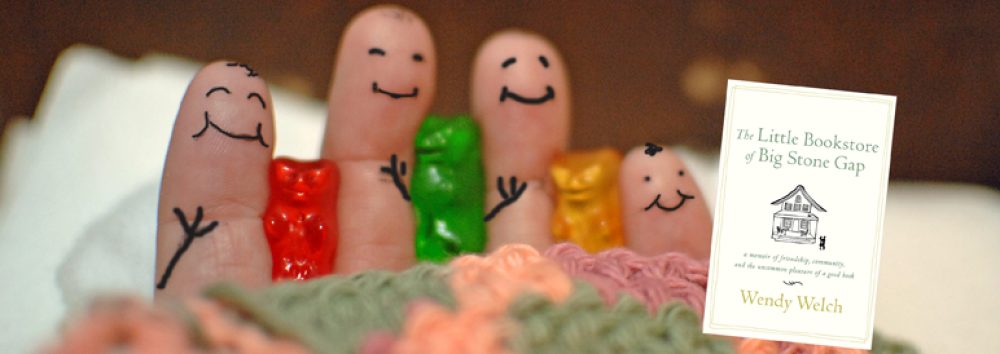
If you’ve ever tried to write fiction, or a memoir, or even a popular culture book about something that’s not entirely academic in thrust (Once Upon a Quinceanera comes to mind) then the words “Narrative Arc” strike terror and despair into your heart. Unless you’re a really good writer, in which case they probably make you feel smug.
Narrative arc is basically your story line gathering itself on the runway, taking flight, and then coming down again into a gentle (or not) conclusion. There are milestones along the way: set-up, problem introduction, small resolutions, climaxes and final resolutions, also known by many other names. The basic idea is that a story has a beginning, a middle, and an end, and that you should be able to read it as a cohesive whole, with the bits that happened first up front, and the lessons learned from all those bits at the back.
For example, here’s a nice narrative arc about a couple opening a bookstore: couple prepares to open bookshop by finding space and inventory; couple opens shop; people start visiting bookshop; couple discovers they lack all skills necessary to running bookshop; couple hastily acquires skills; bookshop hits bump; bookshop rights itself and continues, filling with characters and fun, along its merry way. Bookshop owners sit on front porch, holding hands and reflecting on all the nice lessons running a bookshop has taught them about humanity and life.
That’s what it looks like when you’re finished sorting it out on the page and in your memory. What happens in real life is more like: couple decides to open bookshop; characters fill shop; couple discovers they don’t know how to value books, but before they can learn, more characters are in shop and shop hits crisis of funding; they rush to resolve funding and shop fills with colorful local characters suffering after fires and bereavements and divorces, who want to talk about them; they slowly figure out how to pretend they’re coping with all that but meanwhile they’re learning of new skills they need as fast as they’re trying to acquire ones they already knew they needed a year ago, and the shop is opening and closing, opening and closing, and plans to learn to value first editions are put on the back burner for six months, and people are starting to say nice things about the shop and its effect on the community, but they’re saying them six months apart and in very different ways. Couple winds up sitting on porch, nervous wrecks drinking whisky, trying to figure out what they might need to know for tomorrow.
Rather than one simple line taking neat shape in a half-circle, in life so many lessons are learned simultaneously and on the fly that each arc overlaps and coils back on itself until you’re really looking at something more like a narrative slinky, bumping merrily downstairs, away from you, out of control.
Which is kinda what it feels like while writing it all. Joan Didion says we write to organize ourselves, to make sense of our lives. I’ve certainly discovered, since working closely with my editor on the final draft for The Little Bookstore of Big Stone Gap, just how important another set of eyes is. A story that makes perfect sense to you looks full of holes to someone who wasn’t there, in the storm’s eye. While I’m describing things that whirled and swirled around the edges, my editor is keeping her eye on the center of the story. Just another reason why me-me-me memoirs don’t work; to really get the details, you have to step out of your skin, walk away, and see it from someone else’s point of view.
Or have a really good editor. (Thanks, P and N!)
If you want to read a really good narrative arc, my friend Carolyn Jourdan just got listed as one of the 10 best memoirs to read when learning the craft. Steve Boga, author of How to Write Your Life Stories – Memoirs that People Want to Read, cited her in his book. Carolyn organized her stories by impact: funny, funny, sweet, funny, building on sweet, angering, funny, funny, romantic, and yet the whole arc gracefully rose and fell as characters came and went in completion. No loose threads–well, okay, one, but it helped build romantic tension. And some things are private. :]
Another good one, organized by a different principle, is Sarah Nelson’s So Many Books, So Little Time. She used a straightforward calendar approach, even when she sometimes jumped forward and backward in time, making each month a chapter with a specific something she learned (how to be happy, how to let go of the past, etc.) from the books she read. My favorite association was when she read James Frey’s (now discredited) memoir A Million Little Pieces during a time when she and her husband were fighting. Nice poetic touch to a prosaic timeline.
And then there are memoirs that just peter out about five chapters in. The story gets set up, you fall in love with the characters, they tell you what they’re gonna do, and then it just… stops. And you read disjointed essay after disjointed essay, cute little character sketches or moments, but they don’t build, connect. They are pearls in and of themselves, just not strung together into a necklace.
These are the books we stop reading about page 87, when we look past them one night at our bedside table, and rake our eyes over the stack of books waiting, full of promise, full of… narrative arcs.
Readers LIKE stories that have a beginning, middle and ending. And we really need that middle to have some sort of path forward–even Paul Coelho fans (The Alchemist or Eleven Minutes). There has to be a visible way out of the forest, or we get claustrophobic staying in it.
All lessons learned from reading memoirs as much as bloody trying to finish writing one. And all fun, despite the angst-edged madness one might sense here. Necessity may be the mother of inspiration, but you and I both know that desperation was her very pushy pimp.
Right. So I’m away to head that slinky off before it reaches the staircase….
 Wendy Welch: Books, Yarn, Cats, Opioids