We Happy Few, We Band of Booksellers

Sometimes the little guy does win. Or at least holds her own.

I’m not quite sure what’s happening with bookstores these days – small, independently owned bookstores, I mean; we can all see what’s happening to the giants; Amazon is closing them. But what I begin to suspect (okay, hope for and daydream about) is that we’re gaining ground.

Bookstores are magic places, but I don’t have to tell you that. The watering holes of like-minded souls, the gathering spot for the tribe, they come pretty close to sacred. And it seems to me that, like farmers markets ten years ago, small bookstores are entering a period of rejuvenation and revitalization, even as people decry their loss.  Readers have begun noticing how much more fun it is to shop with real people than online. Realization is dawning that—like breaded, fried fast food versus a slow-cooked home supper—faster and cheaper is not always better (and that the price difference might not be as high as one might think, either).

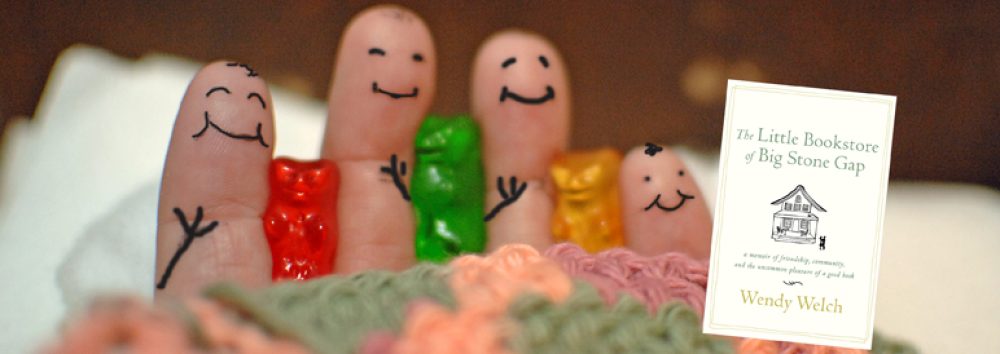
That’s why I wrote The Little Bookstore of Big Stone Gap: to celebrate this way of life that some proclaim dead or dying.  And that’s why I cried in the middle of Ann Patchett’s acceptance speech for “Most Engaging Author” at BookExpo America, when she recited the St. Crispin’s Day speech from Henry V while all these pictures of people who run bookstores flashed on the screen. Sweet people. People standing behind messy counters, in front of orderly shelves, hippies in scarves and skirts standing next to well-coiffed people in tailored suits, people who dress and think completely different from one another, arms entwined and smiling.

God love us, we are the ones who keep the barbarians from the gates. We keep a stall in the marketplace for stuff that lets people think for themselves. We take the financial risks of hand-selling things we think are good, even if they’re not commercially viable. We take trade-ins; we make staff pick shelves; we listen, listen, listen to our customers, and offer suggestions based on what they said, rather than who paid us for  a pop-up ad.

We can’t be bought, but boy-o can we sell.

I cried the whole time those pictures flashed. We are the little guys, the reeds still standing in the wind because we’re flexible, smart, and fast. What we do is so important: we help people think; we help them express themselves. And when they express themselves in particularly charming, compelling ways, we give other people a chance to hear those words that never will get made into movies.

What Ann Patchett and William Shakespeare say is true; sometimes the little guys win. Here’s tae us!

Dear James Patterson….

Dear Mr. Patterson,

I’m sure your mom loves you; probably you’re a nice man who is good to dogs and small children, and you try not to run over any manatee in your private pontoon boat near your inlet coastal home.

But frankly, dude, I am so over you.

My husband and I run a used bookstore, and not a week passes that one of three things doesn’t happen:

(Sorry, did you follow that okay? I’ve read a couple of your books, so understand that you prefer simple syntax.)

1)      The door opens and someone staggers in bearing a box full of battered mystery and thriller paperbacks; about 1/3 of them are yours. The others will be Mary Higgins Clark, Danielle Steel, or Patricia Cornwall. (Not that your private life is any of our business, mind.) The person trading these in will dump them on the table and head straight for classics, waving a dismissive hand behind him- or herself. “These aren’t mine; a friend was moving and said I could take them. Never read trash like that. Have you got any Hemingway First Editions?”

2)      The door opens and a customer comes in asking for you (your books, I mean; we all know you don’t get to Southwest Virginia very often.) I point out the shelf you share with John Grisham (again, your private life is your own) where we now stash you for $4 a paperback, $6 a hardback; it just saves time, not having to price you every day. The person scans quickly, then frowns. “These are old. I want the newest one. Why don’t you have it if you have all these?”

3)      The phone rings and someone offers to sell us “a really valuable set of books.” Three times in five, sir, they are talking about an entire hardback collection of you. We explain that we don’t buy books for cash, and they become irate. “This is a really popular author! Everybody reads him!” Yes, we know. We have a growing stack of this popular author’s older hardbacks creeping up the wall in one corner, because they outgrew that Grisham/Patterson shelf. One day some of our foster kittens were playing nearby, and the pile collapsed. You just missed committing multiple felinicides, James me lad. Wouldn’t that have made you feel terrible?

So, Mr. Patterson, we just want you to know–and no hard feelings–that we kind of hate you. Nothing personal, but you make us feel like book pimps instead of erudite scholars. Plus, your customers are so … loyal. We suggest a Kava, plead with them to try a Jance, lead them to Scottoline, even beg them to consider Hillerman or Stabenow. We extol variety as the spice of life.

Nothing works. It’s your spiciness they crave, Mr. P, you who have filled used bookstores everywhere with your 1,2,3, nursery rhyme titles, with your “same-plot-different-characters” smoke, mirrors, and adverbs routine. You are giving the readers exactly what they want.

{Sigh}. And that’s why we hate you.  So now you know, and I hope you can still sleep at night, riddled with all that guilt.

Sincerely, Wendy and Jack, proprietors, Tales of the Lonesome Pine Used Books

P.S. Please do not send any of those men who read your novels professionally for ideas, to rub us out. We are small town people and would have no defense. Thank you.