
The Bookshelf Con

(Jack and Wendy have headed off to the first book-signing today, leaving Andrew Whalen, shopsitter, extraordinaire in charge. Here’s Andrew’s guest blog for this weekend.)

I have a big secret:

I’m keeping a little list on the side, like a mob bookie running numbers outside of The Family. The list contains books I’ve found on the shelves here at Tales of the Lonesome Pine, and desire… AND I WILL HAVE THEM.

I wrote earlier about the perils of alphabetizing, and I’ve continued to  tackle a shelf a day. It makes me look dutiful and pragmatic. Section by section I can be sure that the shop is in an order I can navigate. It even helps me get to know the stock more, so I can help customers.

WINK.

THE-STING-NOSE-RUB.
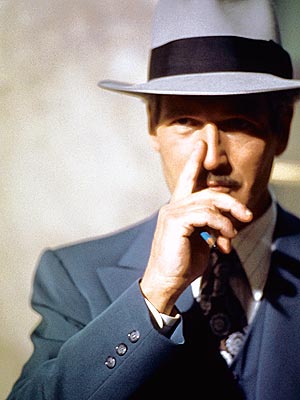
You see, I was actually running a long con. Alphabetizing is just the excuse for eye-balling books that I super want to filch. Books that I want to transform from books into possessions.

The thing is, I could probably just hide them. But that would be unsportsmanlike. And the classic gentleman con-man values honor above all else. He also dresses really dapper. Still working on that one. Okay, no I’m not, that’s a lie… or a CON. So I’ve left them in place, visible and perfectly alphabetized. It is up to the whims of the bookstore to determine whether they get sold or not.

At first I figured that my tastes ran weird enough that I was safe. I would not hoard gold, like a dragon, but leave it out for all to see, and still I would win the day and walk away with my reward. But then, justhours after placing one of my beloveds, in comes a customer. He pulled MY book off the shelf. If he had seen me stroking the cover and purring, “YES MY SWEET YES YOU WILL BE MINE,” less than an hour earlier, well, he may have been too grossed out to touch it. But no, he flopped it onto the table and handed over his filthy lucre. “Going to use this for toilet paper… for my incontinent iguana,” he said, in my mind, where I imagined him being an awful person.

So the game’s afoot. The books are out on the shelves. I’m not going to tell you what any of them are, but there are several in the Sci-Fi section, one in General Fiction, and one in History. OR THIS IS A DOUBLE BLUFF.

And now, with this blog post, I’m definitely spilling the beans. The jig is up. Unless this blog post is all part of my elaborate ruse…

THE-STING-NOSE-RUB… AGAIN.

The Weight of Books

Yesterday our “Let’s Talk” group met for its monthly session in the bookstore. This is an open-invitation group that chooses a one-word topic, rotates moderator duties, and has a grand time dissecting the ideas involved.  Past topics have included evil, debt, karma, suffering, forgiveness, and–last night–ghosts.

Many tales were told of spirits returning, and as we shared stories, a theme emerged: that the returns we were speaking of were almost all benevolent, and that often even those of us (like me) who have never seen a ghost have felt presences, sensed weights or feelings that gave the impression of someone–a loved one or a stranger–being there.

That led us to the idea of a word I’m not sure I can spell: nefesh (that’s the phonetic version) the spirit that animates, the complete life of a being, in Hebrew. That word appears fairly often in the Bible, and more often than we might think in our lives, even if that’s not the term we used to define it.

The weight of being, the sense of someone’s presence, stays in their physical stuff, was what the group basically agreed. Call it memory projected by the bereaved, call it animation from beyond by the departed; just don’t dismiss it, because even those who have no truck with ghosts and goblins still have encounters with this nefesh thing when they enter a departed loved one’s room, pick up her hairbrush, smell his aftershave.

Could books be a prime example? People read book for all sorts of reasons: entertainment, information, enlightenment, to score points, to follow the crowd, to escape. Whatever the reason, does the reader leave a tiny piece of self behind in it? Not the jammy fingerprint at the top of the page or the grease spot from the burger–although we see plenty of those in the trade. I mean do people leave the weight of their presence behind when they read a book? Rather than your picking up a blank slate full of ideas for you to accept or reject as you choose, are you picking up (in a pre-loved volume) a little bit of the ethos the previous reader left? Does the book have a wisps and whiffs of what those who went before thought of it?

It’s an interesting idea, isn’t it? I really had considered books as idea houses: take them or leave them, but what’s in here is written down, pinned like a butterfly for study rather than one to admire in flight. But what if, oh what if books that have been read twenty, thirty times by different people carried just the hint of what people thought about the ideas contained therein? Would the dissonance of conflicting ideas create white noise to rub out acceptance? Or previous approval aid the willing suspension of disbelief?

Sometimes, when I’m handling the few very old books we have in our shop, 1800s titles, the tome in my hands feels heavy with solemnity, a weight beyond paper and print. Perhaps it really is nefesh, a sense of all the people who have read it before, and left the breath of their thoughts on its pages.

Hmm……