
The Burns museum the day before set us up well for the shenanigans of Day 6. One of The Bard’s most famous lines says “The best laid schemes o’ Mice an’ Men gang aft agley.”
Before leaving Inverary I dashed to the SPAR shop for some Fishermen’s Friends cough drops, famous the world over. And who did I see coming in as I was going out but a familiar face from the Inverary Pipe Band video?! One of the drummers gave me a smile and nod. But there wasn’t time to converse. The tour was waiting for our day out in Glencoe and the long drive up to Oban so we could take the luxurious Isle of Mull ferry over to, well, the Isle of Mull, and spend the night in the harbor town of Tobermoray.
Glencoe is a world-famous story, but there’s a lot of rubbish added over the generations about Scots and English, Catholics and Protestants, and what a hero/cad Charlie (as in Bonnie Prince) was. It’s complicated; even in the 1600s being late for a meeting and not having your paperwork filled out could result in tragedy—in this case, 38 deaths.
Short version: all the Highland clans were required to sign an oath of allegiance to William of Orange (as in the guy from William and Mary College) by Jan 1, 1692. The MacDonald chief arrived late to the wrong place. He had to go from Fort William to Inverary (where we had spent the night last night) and got there Jan. 6, begging to sign the oath. Told everything was okay once he’d signed, he went back to his clan. A few weeks later, 120 soldiers showed up to be garrisoned in his town. Well okay, Highland hospitality is legendary and the soldiers weren’t causing any harm. The MacDonald chief took some people from the Campbell clan into his house. What he didn’t know was that on Feb. 12, a letter arrived telling the commanding officer to “extirpate” everyone under 70 years of age.
Here’s another thing about Scottish hospitality: it is sacrosanct. Nobody can survive outside on a mountain in the winter in Scotland; people were obligated to take each other in, and when you shared a fire and a meal with people, you were obligated to be at peace with them. Otherwise the world would fall apart.
Which it did, because at 5 a.m. the commanding officer killed the MacDonald clan chief and several of his sons; the wife and youngest son escaped as the garrisoned soldiers set the village on fire.
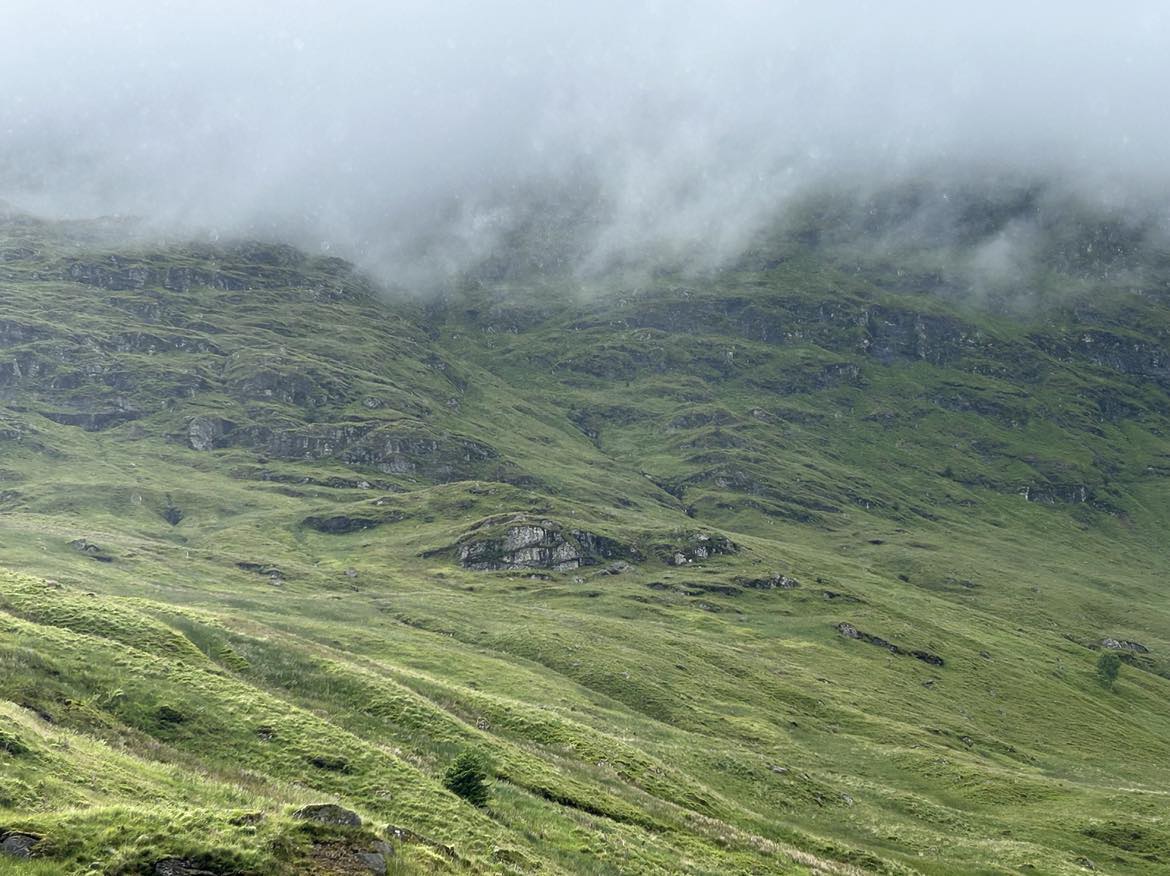
Many people escaped, although it’s not known how many died running through the snow up a mountain slope to get to Appin. Another group fled into a place called the Lost Valley and hid there.
The ones that did escape were probably warned by the soldiers billeted in their houses. One story goes that a child heard a soldier telling the family dog quite loudly that he shouldn’t sleep in the house that night, it might be bad for him if it caught fire. Another story says a piper from the visiting regiment went out on a hillside and played a funeral dirge. Who knows, but the fact that 38 people were killed in a village of more than 200 suggests that even official orders couldn’t change the Highland code of ethics for some of those boys.
The aftermath of Glencoe’s Massacre was the destruction of the clan system, which had been the strategic plan all along. If you couldn’t trust Highland hospitality to hold, you may as well barbeque a human and eat flesh. Life as they knew it was over. So the Highland Chiefs did what American parents did during the Civil War: divided up their sons to ensure family survival. Oldest sons went to London to get educations and understanding of the new world order under William. The others stayed on the land, until their brothers’ sons came home Englishmen in thought and deed and told everybody to clear out and make way for sheep farms. The line from the Massacre to the Highland Clearances is a straight one.
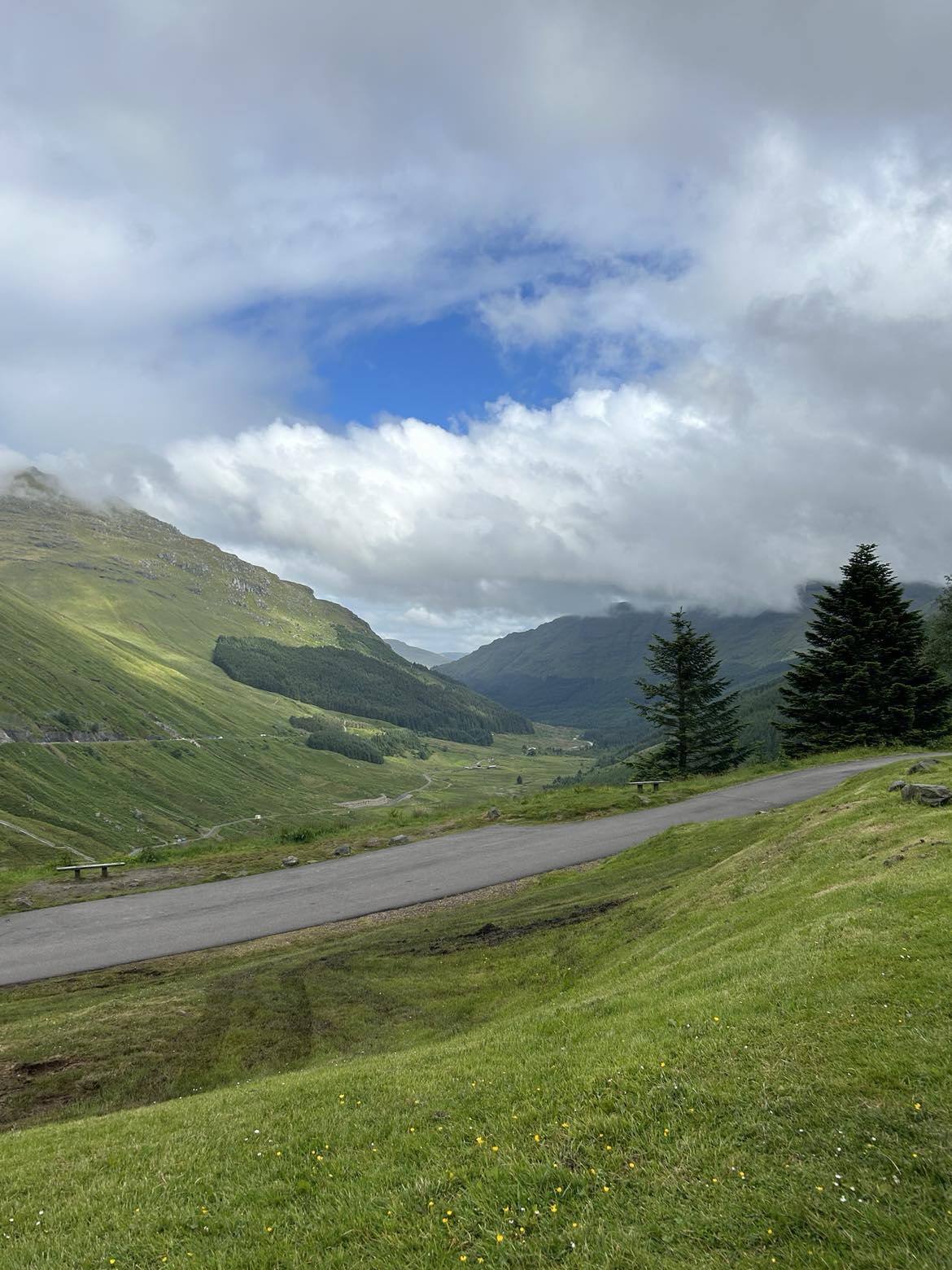
The interpretation center tells the tragic story in more detail, but also highlights the Glen as a national historic preserve with unique layers dating back to the ice age. https://www.nts.org.uk/visit/places/glencoe/highlights/visitor-centre
Everyone was deep in thought as we drove on through scenic mountains to Oban, where we arrived early enough to catch the 3 pm ferry. Alas, the car before us got the last berth so we had to wait until the 5:30 sailing. No matter; that meant we could ransack the delectable chocolatier, plus the only charity shop Oban had. Cassidy and I spent a happy hour in there and returned to a van groaning with chocolate from the rest of the group’s purchases.
Which turned out to be fortuitous. The ferry broke down. Goodbye, Isle of Mull with its luxury bar and restaurant. Hello, small old rusting thing with a coffee vending machine grabbed from somewhere that transported fisher folk and sent to us for 6:30. By the time we got to Tobermoray, we were all a little tired.
So finding the hotel had muffed the room arrangements made me downright cranky. The 20-something behind the counter put on a facial expression that said louder than any words, “I don’t get paid enough to deal with American Karens” and the battle was on. Finally I said, as patiently as I could, “Madam, the bus driver you are trying to put in a double bed with this young lad has known him four days. That’s a little soon for them to be sleeping together, don’t you think?” And the tour members burst into laughter. So did the child behind the counter—and then she fixed the room arrangements.
We meandered Tobermoray for an hour since they couldn’t give us dinner until 8. Sigh… another hazard of the late ferry. But everyone was in good spirits when we sat down to—
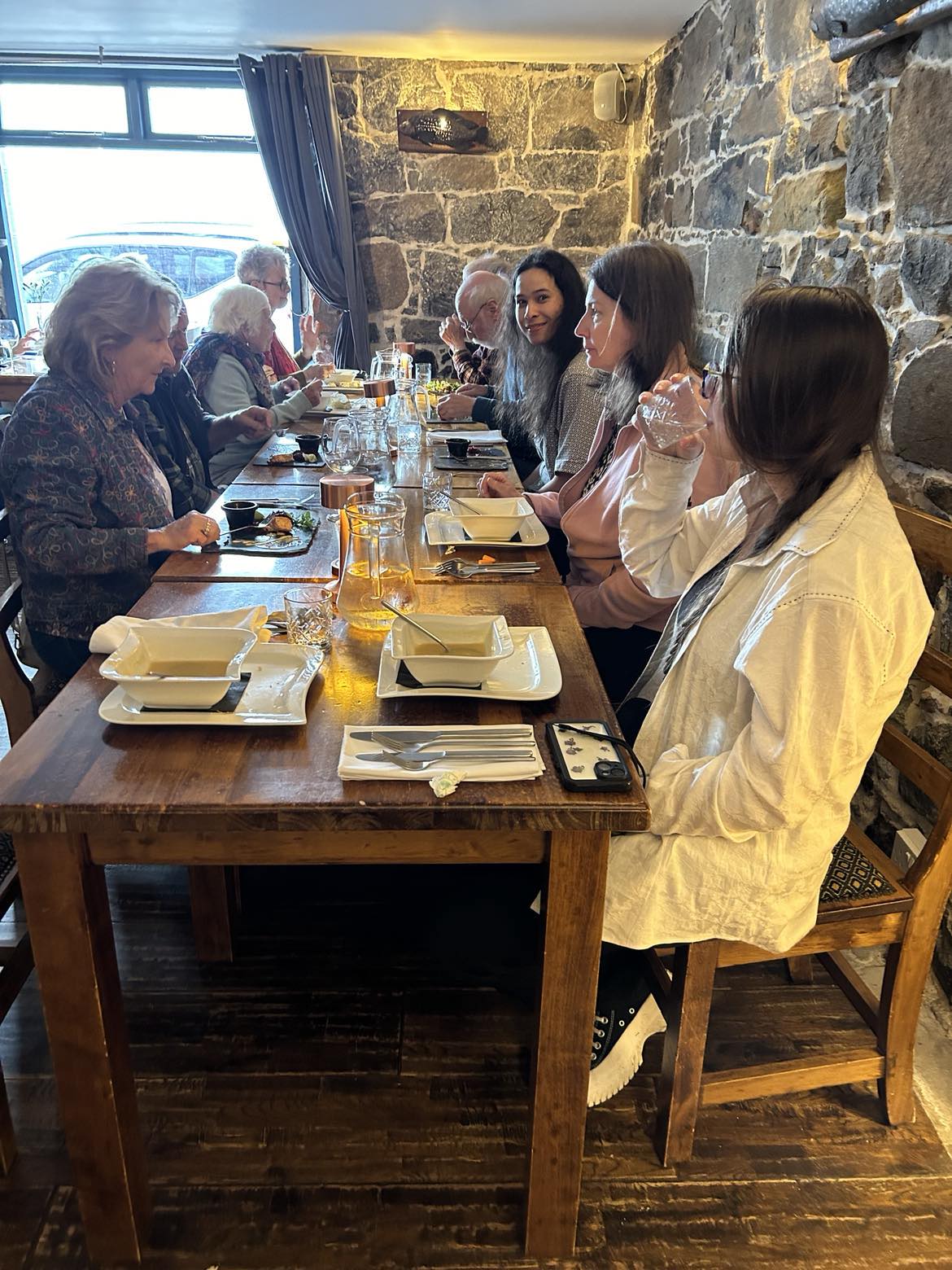
–the worst meal in the history of Scottish cuisine. Five of us had ordered the hake. We received bowls of baked beans with a potato halved atop the beans and a whitefish filet on the potato. It was, in a word, vile. So vile, even Gareth wouldn’t finish everyone’s portions. We began to laugh and come up with names for this inventive dish. Sculpt it into shapes. Anything but eat it.
Fortunately, there was sticky toffee pudding for dessert. And everyone still had loads of chocolate from the sweet shop. And the hotel had a lovely bar.
People waddled off to bed a little later that night. Did I mention the hotel had a lovely bar?
And darkness fell about 2 in the morning, because we were farther north now, and we slept.




 Wendy Welch: Books, Yarn, Cats, Opioids