
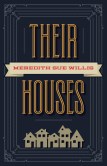
 I got sent this book as I was leaving the Book Editor position for the Journal of Appalachian Studies. It was a wild ride (the book, although so was being editor).
Wells sets up a bizarre but plausible set of circumstances, and rides the wild waves from there: an old guy who struck it rich as a conspiracy theory revolutionary wants to reconnect to sisters he knew in childhood. All of them had weird childhoods, in the Jeanette Walls sense. The girls used to build little matchbox houses for their toys and called them “safe houses,” and kept them in a trunk–the same trunk where the younger sister hid drug money she stole from her older sister when she started running them….
That’s partly how the old rich guy got rich, and partly why he has a panic room. And partly why he loves the sisters, particularly the older one, so much. She turns in later years to religion and marries a preacher with a shady past that reaches into the present every now and again, with no complaints from him. (Every character in this novel is complicated, but not deep, is the best way to put it?)
Each chapter in the novel features one of the six main characters, and you will find this featured in the book group questions at its end: how do these different perspectives give the reader any sense of what’s going on inside all this chaos?
Good question. This book is chock full of things that don’t make sense, except, well, contextually they do. If you like Vonnegut, you’ll like Wells. Anything goes. Including the rather satisfying ending.
 It’s been awhile since I devoured a novel so thoroughly as this one. Hashimi writes in a simple, straightforward way. (And be warned, a couple of times the point of view shifts because the copy editor didn’t catch it.)
 Wendy Welch: Books, Yarn, Cats, Opioids