
Rewrite a Classic Title Game

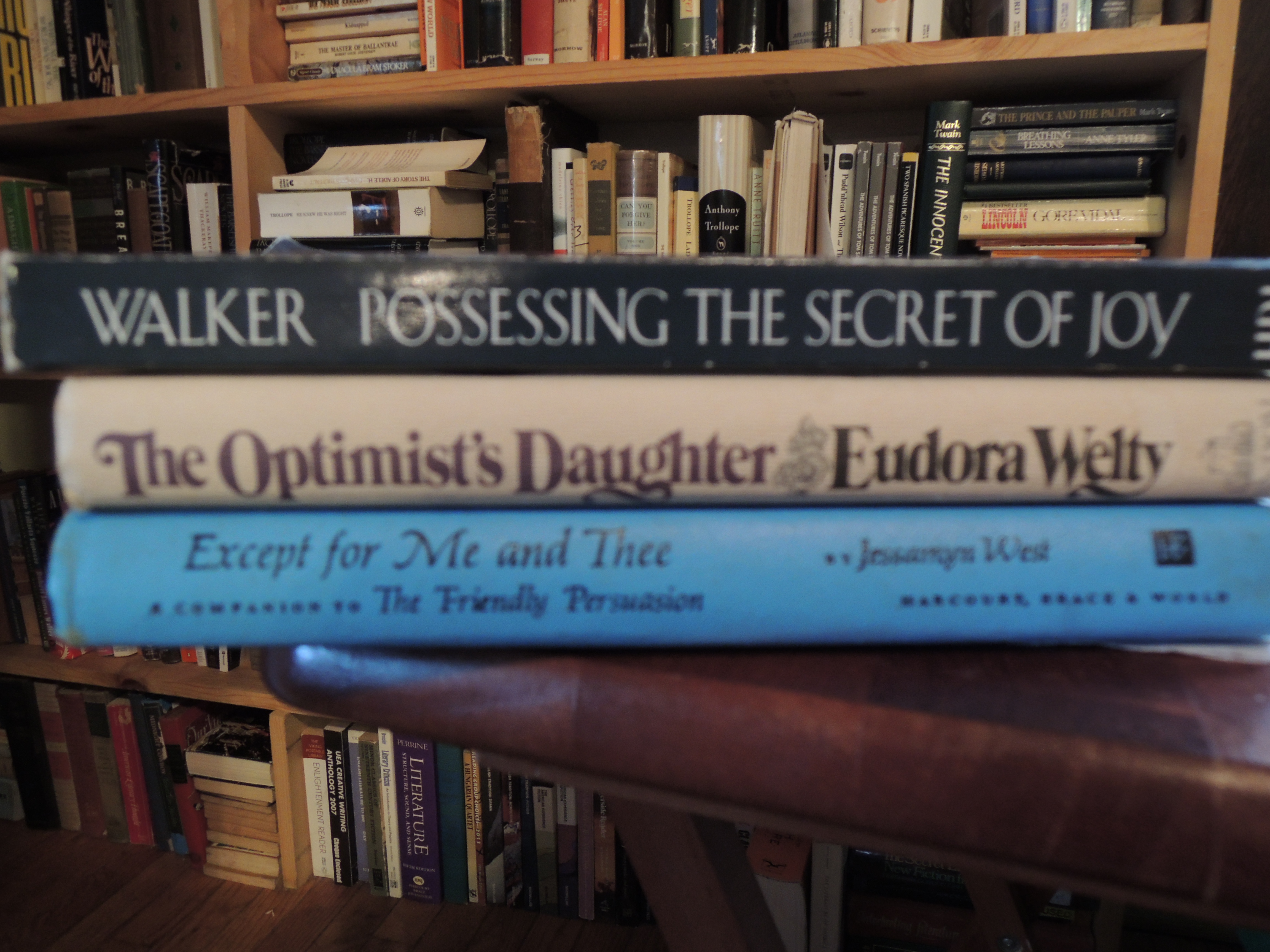
DSCN0018Some friends and I on a bookstore owner list were playing with classic titles, rewriting them to reflect the realities of running a bookshop. Here are a few we came up with:

Oh the Places You’ll Dust

Farewell my Harlequins (please!)

The Old Man and the C Shelf

Bonfire of the Vanity Presses

The Optimist’s Slaughter

Go Set a Watch (for those unfamiliar, timing the moment your front door can close so you can go to a party/go to bed early is one of the big joys of small business ownership)

How to Make Friends and Influence People’s Reading Habits

And we actually found a few titles that needed no alteration:

The Hunger Games

The Friendly Persuasion

Odd Hours

Yeah, you kind of have to be a literary snob, or worked retail, to get some of them. Please add your titles in comments. It’s kind of addictive once you get started….

Think and Grow Poor

The Thorn Books (those by authors whose star has faded; think about it)

The Cuckoo Flew Over One’s Nest (because you do kinda have to be crazy to do this)

To Kill a Mocking Teen

The Devil Wears Too Much Perfume (for all who’ve ever been choked by a customer)

Along Came a Spiderweb

Two Years before I went Bankrupt

The Battle of the Bookshelf Labyrinth

A Farewell to Free Time

A Prayer for All the Meanies (if you’ve ever worked retail….)

Come on, you know you want to make up a few…

The Monday Book: SEE NO EVIL by Robert Baer

spiesWhen I teach Cultural Geography, I sometimes assign the film Syriana as an extra credit option. Inevitably, all but the brightest students turn in something along the lines of “I couldn’t figure out who the good guys and the bad guys were in this movie because everything was so twisted up.”

Yeah. Welcome to the Middle East spy network.

Baer is the “Bob” who inspired the film, and who (spoiler alert) dies in the airstrike he tries to prevent. And if you think Syriana is convulted, try reading this memoir of Baer’s life in the CIA. On the one hand, it is chronological of the guy’s life experiences. On the other, it describes in bland prose some of the most amazing twists and turns. It would be a great spy novel if you didn’t know people had died because of it.

As an example of how Baer lays out the frustration and confusion, he goes to a small Kurdish-held village on the Iranian border to see what the Iraqi official he’s working with has done: one person says he attacked the village; he swears he didn’t. After a four-hour trip in a Toyota truck mounted with gun turrets (which means he pretty much looked like the Taliban, this American CIA operative) they arrive to find the village has been shelled. He calls his Iraqi contact and says “I know what you did.”

As Baer writes, ” ‘You betrayed me,’ was his only response….. only in the Middle East could you betray someone by refusing to accept the lie he had told you in the first place.”

The book is dated as current history, but as a story of why systems continue to fail because of human personality, it’s pretty much timeless. If you’ve ever read The Prince of the Marshes, by British author Rory Stewart, Baer’s is pretty much the American equivalent.

The funny thing is, Baer makes things very clear even though he really can’t write for beans. His prose is flat, sometimes his verbs are suspect, and he never waxes poetic or gets on a soapbox. Perhaps that helps, in a memoir delivering so many mixed messages while trying to hold onto its own main theme: We’re screwed.