
The Monday Book: Bridget Jones – Mad about the Boy by Helen Fielding

Bridget Jones: Mad About the Boy – Helen Fielding


Regular readers will know that I (Jack) tend to read more non-fiction than fiction, but I do make exceptions. So when ‘Bridget Jones: Mad About the Boy’ slid into the shop, I made one of these exceptions.

My introduction to ‘Bridge’ was through the movies of the first two books in Fielding’s series, which led to me reading them as well. And enjoying them.

This latest addition is very much in the same style as the previous ones and I agree with many reviewers that Fielding really does have a knack for capturing a place and a life-style. The life-style is that of engaging and fashionable 30 to 40 year olds and the place is modern day London.

My problem is that I’ve always hated London – actually, I’m not that keen on any big cities, but London is right at the bottom of places where I’d like to live! So it’s meant as a compliment that I’ve enjoyed all the ‘Bridge’ books despite their setting.

I could say the same for ‘Four Weddings and a Funeral’ as well as ‘About a Boy’ – also about the same kind of social group and in the same setting. Maybe there really is getting to be a specific genre that we need to create a special shelf for in the bookstore: Trendy 30-somethings in the Big City. We could title it ‘Cheers’ or ‘Friends’ – – –

Seriously, though – I did enjoy ‘Bridget Jones: Mad About the Boy’ as poor Bridge dealt with being a widow with two small children, the guilt of wanting a new companion, school events, life on Twitter, and the inevitable daily catastrophes. I particularly liked Fielding’s cheeky inclusion of Bridge’s negotiations with a movie company over her updating of ‘Hedda Gabbler’ by Anton Checkov (yes – Gabbler with two ‘B’s and, yes, Anton Checkov!). Fielding’s writing is just short of madcap, and paints word pictures one can’t forget.

Two glasses of sparking Evian Water up for ‘Bridget Jones: Mad About the Boy!’


kings mtnJack’s weekly guest blog


So – Last night was one of “speak to a group about living in Appalachia” talks. It happens often; this time it was to the Appalachian Service Project (ASP), a team of young folks from various ‘airts and pairts’ in the US who have come down here to take part in a variety of practical projects.

I began by explaining where I’m from and how I came to be here. I always start that way to help them tune in to my accent. It’s not just accent, of course, it’s much more than that. Vocabulary, grammar, figures of speech – after 12 years in the country one thing I’ve discovered is that my particular form of English is far removed from the American variety, and I’ll never get it completely covered!

Once their faces began registering they could actually understand me, I explained a bit about Scotland and my earlier life there. Despite the strong awareness around the world about things that are ‘Scottish’ (kilts, whisky, golf etc.) I always find a quick geography lesson helps establish reality in the midst of Nessie stories.

From there I moved on to how I came to be here – which sums up pretty much as “I met this girl….”

Finally to the meat of the evening – Appalachia and my remit to point up the parallels that I’ve encountered between it and Scotland. The culture of course – fiddle tunes, folksongs and ballads – but more than that, the stereotyping I’ve encountered as a Scot and my Appalachian friends equally. As a Scot I’m mean, wear a kilt all the time, am red-haired, fight everyone I meet, hate the English, and on, and on – I’m a ‘Jock’ or a ‘Sweaty’ (Jock = sweaty sock). It’s very hard, I explained, when a stereotype has been long established, to counter it. Here, my Appalachian friends are often considered toothless, wear dungarees, are under-educated, and on, and on – – –

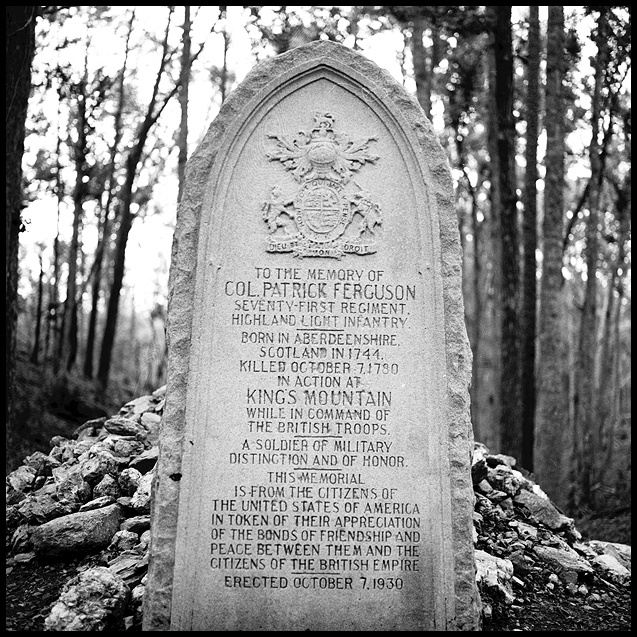
I explained what the Battle of Kings Mountain was really about – something pretty mislabeled in true history, and a real overlap between Appalachian and Scots culture.

Finally, I commended the ASP students for having the enterprise to go out and see for themselves how other folks live and how our folks might not conform to any popular image. I suggested that there are minority cultures all over the world that have their identity thrust upon them, so they shouldn’t believe everything they hear, but go and see for themselves. It was a very nice night.