
So I moved out to my idyllic country home in May and will stay here until I leave for Scotland at the end of August. The little house in the big woods has a screened in front porch. I’ve taken to having my morning coffee and doing my computer work from there, as it’s cool and comfortable and comes with live stereo.
The woods are full of birdsong. Birds are not creatures I’ve particularly noticed over the years, and perhaps part of the charm here is that I almost never see them–with a couple of exceptions we will get to in a minute. I told someone the birds here were like prayer: you don’t see anything but you feel the power.
Knowing nothing about birds, I did what Americans do: downloaded an App. Merlin is the most-recommended free app for IDing birdsong. You turn it on, point it at the woods, and wait to be told what you’re not seeing.
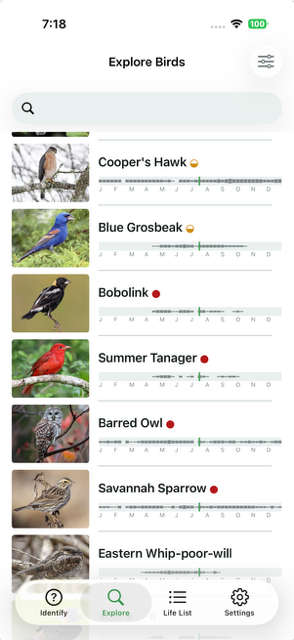
Which will have a name like blue-headed Vireo, red-eyed Vireo, yellow-shouldered Vireo, oh that’s a Blue Jay, green-footed…. you get the idea. It became a game: I would rush out every morning to see how many birds I could collect. The first week, it was five new per day. Then three or four. I reached 50 birds and felt as though I were winning at life, or at least whatever bird bingo game I was playing with myself.
It tapered off after 50. I started trying to discern the differences rather than bag the birds, and soon I could tell ravens from hawks and sparrows from cardinals.
Crows and hawks are the only birds I actually see, aside from the occasional swooping sparrow or goldfinch. The crows come in murders of two to seven, and yes, I have begun looking up folklore and counting crows according to old rhymes. Especially when a single crow perched on my back deck and glared at me.
But that hawk (red-shouldered, if you want to know) is not supposed to be here, according to Merlin, and that’s where my troubles began. The app will tell you what you’re likely to see or hear in your area, and if you record something else, well, it gets stroppy. A little red circle appears next to the bird it IDs and it says “unlikely.” But if you keep recording and the app records it again, it reluctantly turns the circle green and allows you to put the bird on your life list of those you have seen or heard.
We fought over the hawk for a few days until Merlin admitted it was here. Then came the ravens, distant ripples in the woods that sounded less like birds than animals fighting. Merlin said no way. Then it said maybe. By the time they sounded as though they were across the street, Merlin said ok, fine, have it your way, you have ravens. I learned to discern happy baby ravens from angry parent ravens. I learned to hear how they fought with the crows and jays. It was all going great.
And then one morning, distracted by some chore, I left Merlin open for 35 minutes on my front porch. When I realized it was still on and went to shut it off, it had recorded 133 birdsongs. Including peacocks, Mergansers, four kinds of woodpeckers, a heron, an egret, and a bald eagle.
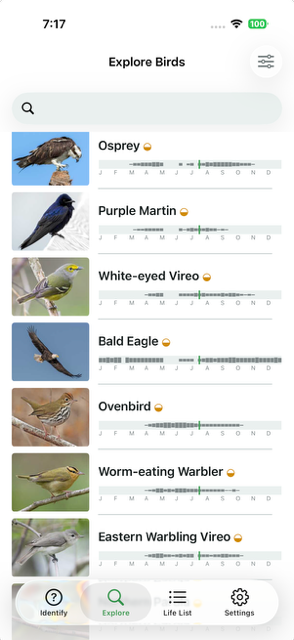
Merlin was angry. Red circles outweighed the green. It is not possible in your latitude to hear pea hens, Merlin’s unspoken subtext said.
Poor Merlin. My neighbors up the street keep several exotic birds, including the unusual ducks and Asian fowl it picked up. I got nothing on some of the others except that May is a time when birds are moving past and our woods are enticing for a break; we have water with fish in it and air with bugs in it and lots of places to hide.
So now I have 152 birds on my life list, and Merlin doesn’t want to talk to me. I can live with that. The birds are making plenty of conversation.
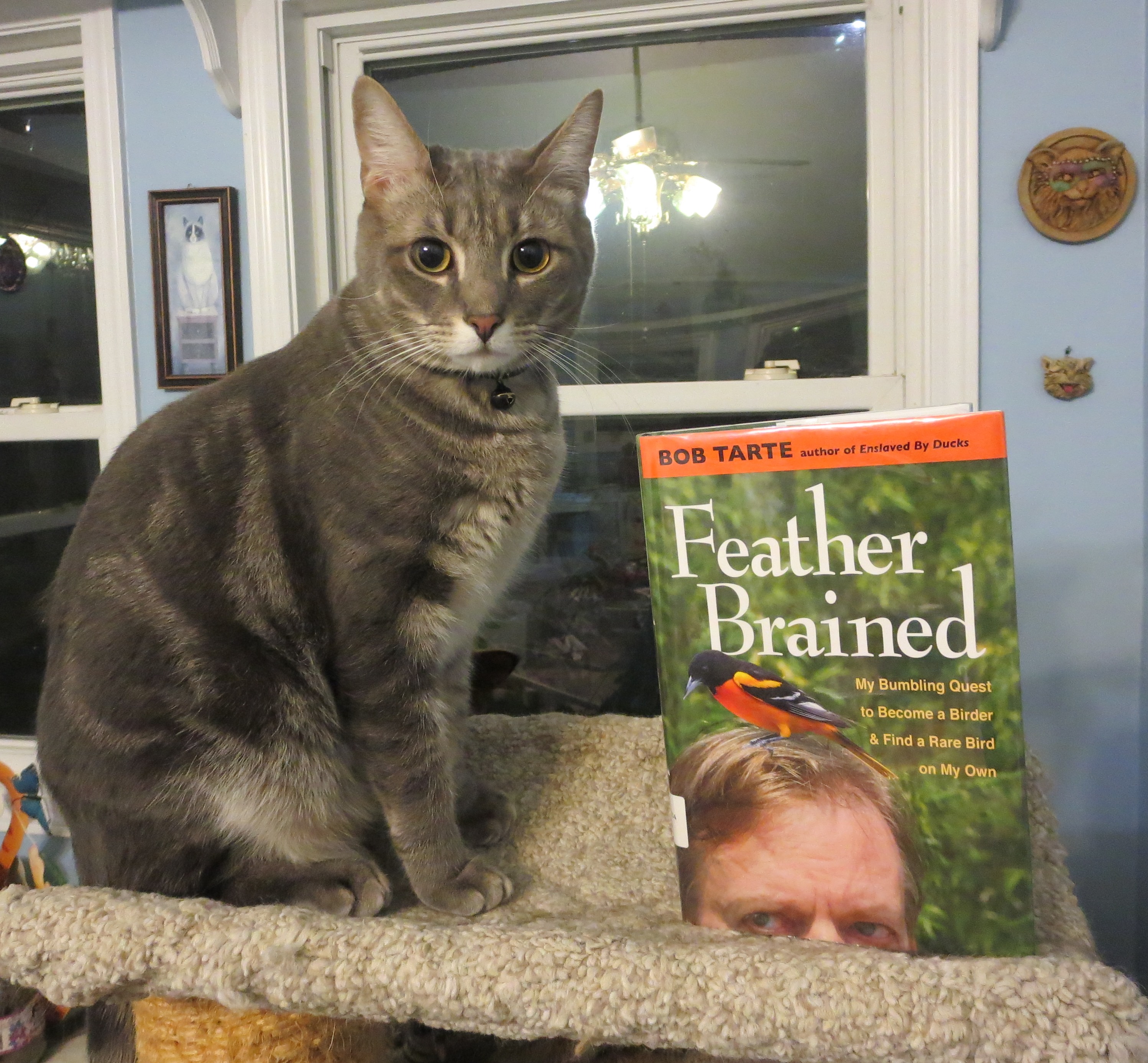 Feather Brained: My Bumbling Quest to Become a Birder & Find a Rare Bird on My Own by Bob Tarte
