
Contact – Chocks Away!

Jack’s Wednesday guest post is actually something of a book review –

The History of The Pound (Rhonda Robertson, Nancy Clark Brown)

Pound is a small town to the north of Big Stone Gap and is sometimes referred to as ‘The Pound’. It’s believed to have gotten its name from one of the surveyors who first mapped the area.

We often receive donations of books into Tales of the Lonesome Pine and this book came in one such box. As I gave it a cursory glance through I realized that it was not only very well written and researched for a privately published book, but it covered a wider area than just the town of Pound.

As I began to check it out more thoroughly I came to a section called ‘aviation in Wise County’. As many of you will know, I’m a sucker for anything to do with airplanes so I was mightily intrigued!

I already knew that one of the streets here in Big Stone Gap is called aviation road and had heard rumors of an airstrip out that way at one time. Here finally was the whole story, and it really is a fascinating one!

The first flight was on 4th July 1913 but the pilot failed to clear trees at the end of the ball park being used and the plane was damaged beyond repair. The first completely successful flight was on June 21st 1915 and was followed by more a week or so later. These also took place at the ball park. It was 1920 before there were more demonstration flights – first at the ball park and then from a farm near East Stone Gap.
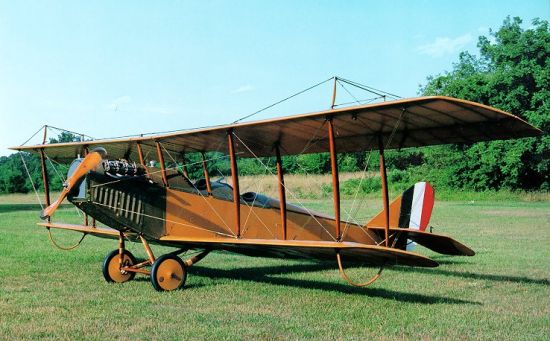
jenny

Curtiss Jenny

It was in 1923 that a dedicated permanent airfield was finally established at Big Stone Gap across the river from the ball park, which is exactly where aviation road is today. Once the airfield was operational quite few local people purchased planes – mostly war-surplus ‘Curtiss Jennies’ and British ‘Avros’. Among these owners were some based in the town of Appalachia and they established ‘Cumberland Airways Inc’, buying and refurbishing Jennies and Avros and then re-selling them after testing at the Big Stone Gap airfield. It seems that following this burst of activity the use of the field tapered off and it fell into disrepair and finally was bought by a gentleman who lived close by and didn’t want planes near his house. He required anyone wishing to fly there to get permission from him and there’s no evidence he ever gave it.

In 1938 a completely new airfield called The Powell Valley Airport was built at Crackers Neck just outside Big Stone Gap and a flying school was established there, closing in 1942 and re-opening in 1945. Following a fire in 1948 it closed for good and flying in the area moved to the town of Wise with the establishment of Lonesome Pine Airport which continues to operate successfully up to the present day.
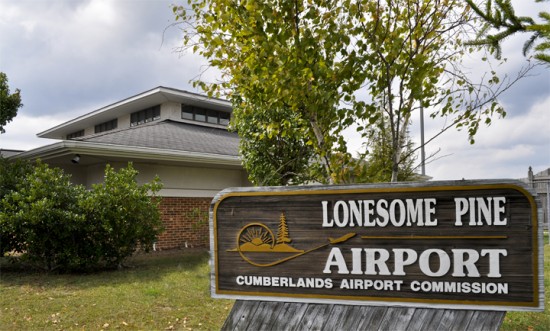
1972_LonePineAirport-550x331

I wonder if there any traces of the three Big Stone Gap airfields still to be found – – –
King’s Mountain?

Jack’s Wednesday guest post is, OF COURSE, late again –

A Dance called America – James Hunter

This isn’t really a book review, but I thought I’d better head this post that way, as much of what will come next is from my reading of this excellent and informative book.

The Battle of King’s Mountain is seen in this area and taught in US schools as a pivotal event in the American War of Independence. While that is certainly true, there is another way of seeing it that has a lot to do with centuries of Scottish history.

Everyone is familiar with the story of the ‘Scotch Irish’ and their settling in Southern Appalachia. These were the children of lowland Scots who themselves had moved to the north of Ireland and established plantations there. These children grew up to find they were unpopular in Ireland and with little economic prospects. So they moved to the ‘New World’ and specifically to Appalachia.

However Gaelic speaking highlanders from Scotland had already emigrated to the coastal regions of the Carolinas and Georgia earlier. These were relatively wealthy ‘tack men’ very high in the clan pecking order and just below the level of clan chief. Once in the Americas they established cotton and tobacco plantations (which is why Glasgow and Paisley became the tobacco and cotton ‘capitals’ of Europe).

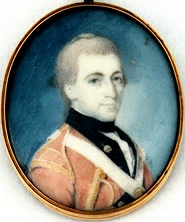
The forces that met at King’s Mountain in 1780 comprised a loyalist army led by a professional British soldier – Major Patrick Ferguson, who was a Scots highlander, and a contingent of patriots who were mostly drawn from the Scotch-Irish immigrant population. On the British side, apart from Ferguson, the army was all volunteer, and they were mainly Gaelic speaking highlanders from the coast. The patriots were all volunteers and their leaders included many with Scots names.

Patrick_Ferguson

Patrick Ferguson

It should be noted here that back in Scotland there had been centuries of clashes between the northern clans and the southern folk – a fault line between two distinctly different cultures!

I could never understand, however, why two lots of Scots that had been, effectively, forced out of Scotland would end up on opposing sides in what was at that time pretty much an English colony. It seemed odd to me.

But, as Hunter points out, the highlanders considered themselves ‘upper class’ and aristocratic before all else and saw the patriots as lower-class peasants who needed to be put in their place. So they aligned themselves with their ‘peers’ in London rather than their fellow countrymen. In doing so they inadvertently simply continued a long tradition of Scottish history – albeit in a foreign land.

Footnotes –

When the war ended with victory for the patriots, a great many of the highlanders who had been captured didn’t return to the Carolinas and Georgia. Instead they made new lives in Canada. At the present time there are more native Gaelic speakers in Canada than in Scotland.

The last native Gaelic speaker in North Carolina died in the late 1800s. He was a Presbyterian Pastor and an African-American!

Shortly after these events the highlands of Scotland suffered ‘The Clearances’, and this resulted in a much stronger feeling of solidarity between the Gaelic and Scots cultures, which has continued to strengthen down to the present.