I Survived the 2012 Bookquake

The sirens went off at noon. I went to the window to find the police barricading the streets. The dogs began barking. They’re always barking, but maybe this was special barking. Things had gone awry.

Something rumbled. At 12:10 I turned to my visiting special lady friend and said, “Did you feel that?” She had.  Must just be something old houses do, we thought to ourselves before going back to our books.

Now the sirens were going crazy. I looked outside, expecting to see the complete breakdown of civilization. Would I need to run to the hunting store next door to buy a shotgun? Nope: Veteran’s Day Parade. Oh.
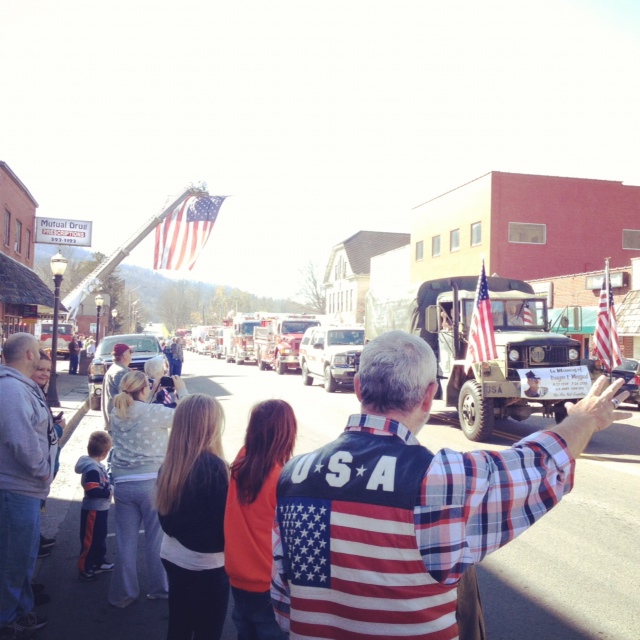
The Veteran’s Day Parade Must Go On

A woman sifting through general fiction got a phone call. “Oh yeah? I didn’t even feel it,” she said. She got off the phone and told me that her daughter had called to check up on her because there had been an earthquake.

The street adjacent to the bookstore split into a wide gash… three days ago when they dug the trench for the new sewer line. I want to say books fell off the shelf in the quake. But that didn’t happen.

So when you see me wearing my “I survived the 2012 Big Stone Gap earthquake” t-shirt, what I really mean is that I noticed the earthquake, then stuck my nose back in a book and took a long slurp from my cup of tea.
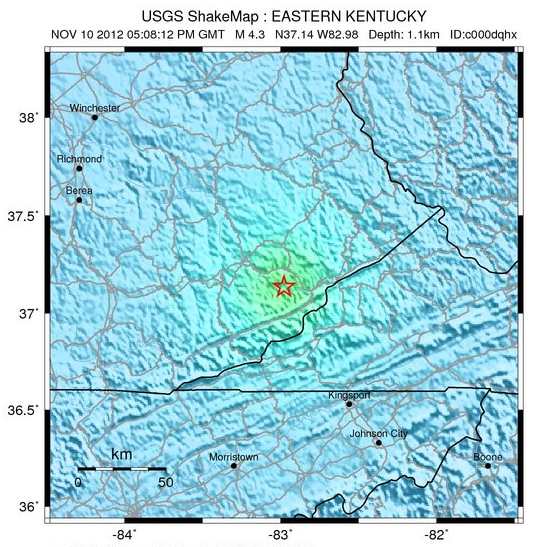
Epicenter of the Mild Distractionquake

Thank you, Mr. S

The sweetest note arrived at our bookstore late last week. I opened the hand-addressed envelope and a ten-dollar bill fell out.

Good start.

The accompanying letter was from Mike S of Rhode Island, who said he’d come across my book in a used bookstore in Connecticut (Book Barn) and picked it up for a fiver. (Which settles one of the questions that Jack, my agent Pamela, and I have been debating: how long would it take for Little Bookstore of Big Stone Gap, a book about a used bookstore, to hit the used books market? 32 days.)

But those of you who have read it know that Chapter 24 (or so) deals with how artists do or don’t get paid for their work, pointing out that resale rarely benefits the creator, etc. etc. Mike said he enjoyed the book so much, he felt he had to send me something as the creator of it, hence the ten-spot. Now isn’t that sweet, kind, genteel?

But Mike also pointed out something that’s been on my mind since my NYC discussion with Nichole (my editor at St. Martin’s Press) last month, when she emphasized that only 5% of all booksales in America are through independent bricks-and-mortar shops. Mike (clearly a man of discerning tastes) likened the rise of little bookshops everywhere to the craft beer industry. A market that used to have just three or four big and basic tastes now has microbreweries everywhere–and those little guys have put the social back into drinking. They’ve returned fun to a business that was sinking under its own weight.

Smallness can revolutionize homogeneous bigness. Etsy is doing so for crafters in other materials besides hops; I have friends selling their gorgeous homemade pottery and knitwear–stuff Walmart will never see and that will outlast anything you buy there–for reasonable prices on that small-creators site. And of course, Jack and I run the classic example of a little bookstore: independent, used, and ours. No corporate manuals, no CEO other than Val-Kyttie (whose every whim is catered to, natch).

So, Mr. Mike, as I said in my return thank you note–a thank you note for a thank you note? Anyway–you have done me three good turns: added an example to the thought path I’m headed down, this juxtaposition of little bigness in the American marketplace; gave Jack, Andrew, and me a laugh when that $10 fell to the floor; and funded kitten kibble for the home team. Staff kitten Owen Meany says, “Thank you, Mr. S.”

So say we all.