
Right after Jack became an American citizen, we bought a pick-up truck. It was the natural next step.
Plus, we’d made several trips to haul books from assorted locations, buy lumber for Jack to build new shelves. I’d spotted a couple of really great chairs at a yard sale but had no way to get them home, etc. A pick-up truck, we reasoned, was Necessary.
So when I spotted a cool blue Chevy on the intranet at my college, Jack called the person selling it, and a deal was struck. But the truck showed up with an AS IS sticker on the window.
Turns out, the person selling it was not the owner, but a dealer … with a certain reputation.
You have heard the phrase “He’d steal the dimes from a dead man’s eyes?” Yes, such behavior may be Un-Just, even Un-Necessary, but it is not unknown–unfortunately.
We bought the blue lemon, drove it five miles, and had to have it towed to a repair shop. The Auto Repair Order says they installed: 1 engine, 6 spark plugs, 1 thermostat, 1 water pump, 1 throttle cable, 1 tranny cable, 1 tranny front pump seal, 2 motor mounts, 1 oil filter adapter gasket, 1 air filter, 1 alternator, 1 temperature sensor, 1 battery.
In short, we got took. Un-Just-in so many ways, and Un-Necessary, yes, but not illegal, because the man not representing the dealership who sold it to us said “as is” and shook hands with Jack.
Do you know something? I would a thousand times rather be married to a man like Jack, who gets taken because he believes someone who shakes on a deal would not deliberately be trying to get as much money for as little as possible, than be married to a man who would commit such an act and then go whistling home to his bed. And I would give ten times what we paid to repair that blue lemon to know that such men would not legally be able to do such things to someone who truly can’t afford it.
Since we can’t have that guarantee, we did the next best thing: invited a handful of friends over for a Blessing of the Truck ceremony. Each friend, representing a different religious tradition, said a prayer and sprinkled the truck bed with water. (We had watering cans for the Presbyterians and buckets for the Baptists, so as to be properly ecumenical.) With much hilarity, we dedicated our little blue lemon (now named Blue Bubba) to the glory of God and the good of humanity, and for communal borrowing among friends, erasing its past as the pawn of people more interested in money and screwing others than good workmanship and happy living.
And we had a lot of fun splashing each other, too.
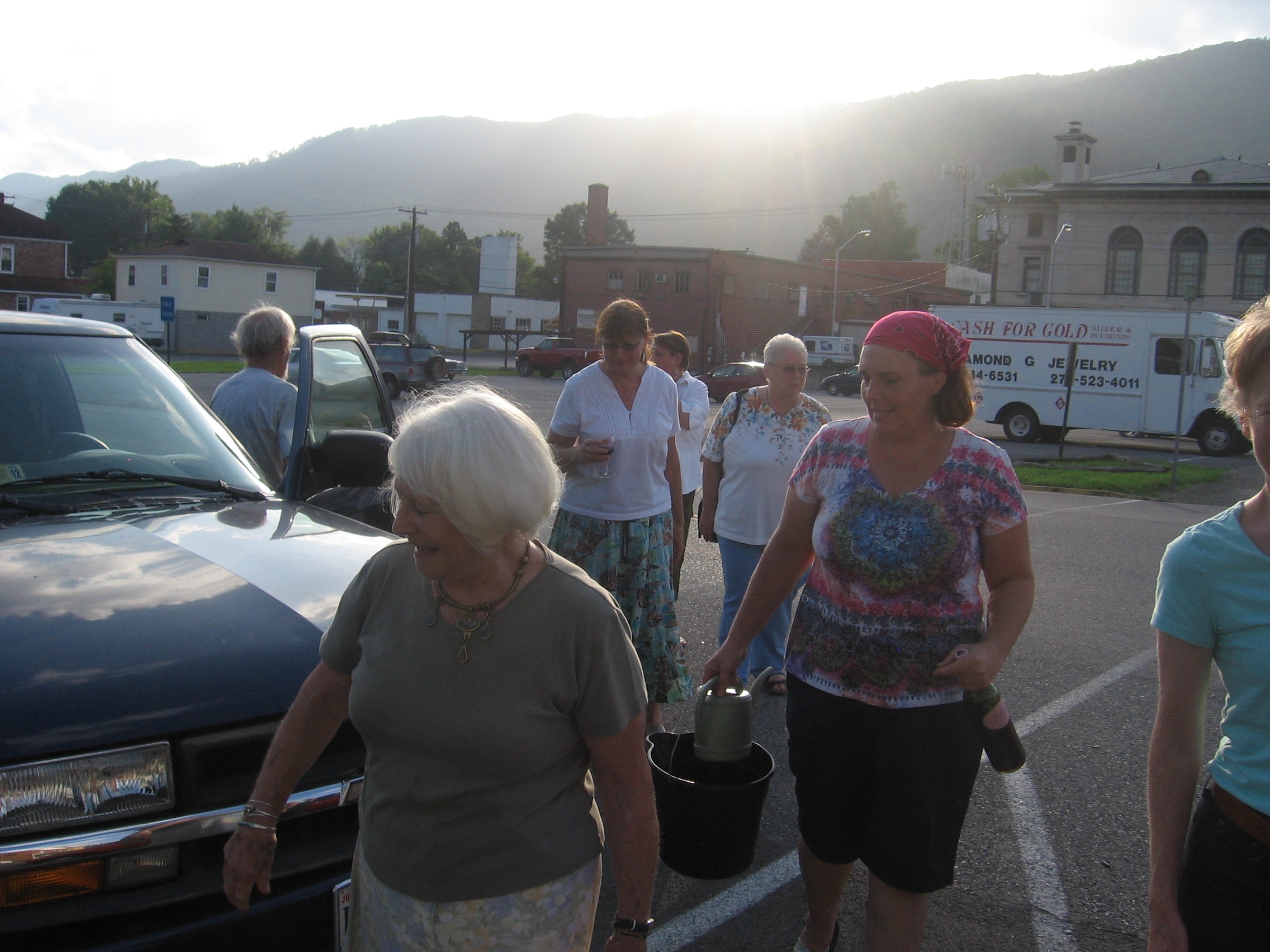
If you want to see the rest of the Blessing of the Truck pictures, they are on
https://picasaweb.google.com/118133767331964566859/TheBornAgainTruck


