
Our shopsitter Emily guest blogs on her shelving experiences
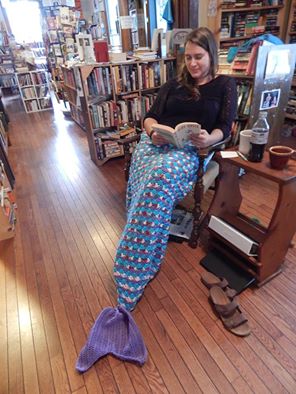 I like to organize. So in a bookstore where there’s always books coming in and out, daily, I feel these urges to put all the shelves in perfect order – alphabetical, by genre, all in a line, etc. Which has led me to stand in front of the shelves for a few days in a row now, head slightly tilted, sometimes just staring, sometimes repeating the alphabet out loud to myself, looking like a weirdo, trying to figure out what all these words on the spine mean and each bound object relates to each other.
I’ve discovered who Grace Livingston Hill is and that “inspirational romance” is quite popular (I’m going to have to try one, it sounds quite nice). I’ve seen parenting books that start with dealing with your own mommy issues and work through just about every month of the next twenty years of your life. There’s more gender in books than I’d ever realized before – clearly, some books are ladies’ books and some books are gents’ books. I’ve spent most of my time so far among the fiction books, and I’m totally impressed by the number of stories there are to tell in the world.
But one of the coolest parts has been realizing that all (or at least most) of these used books have come from someone else’s home, where they were sitting on someone else’s bookshelves or nightstand or closet floor. They probably all have a story to tell about the home they used to live in and how they got that slightly crooked spine. In my time here, the books on these shelves have already witnessed dozens of friendly faces, new and familiar, a rowdy game night, four cats who got adopted, and a strange lady who keeps staring at them, planning a master plan about how best to move them shelf to shelf to shelf just so they can get adopted, too. If only books could speak, right?
 Wendy Welch: Books, Yarn, Cats, Opioids