
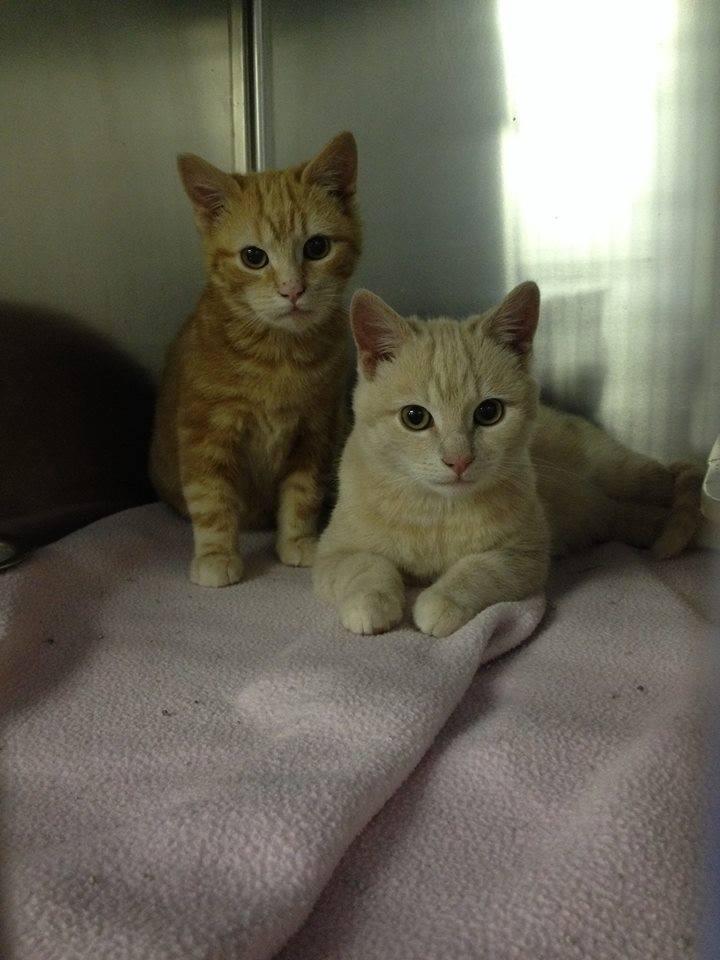
 Hi – I’m Raymond. (I’m the one lyin’ down in the picture here.) People here call me Ray-Ray, an’ I’m down with that. I’m down with anything so long as we get to stay in a warm, friendly place!
Richie and me – that’s my twin brother – we were just mindin’ our own business with our sister one day, an’ all of a sudden our humans put everythin’ in boxes, pushed us out the door, an’ drove off. We waited under the trailer awhile, but they never came back, so we huddled together tryin’ ta stay warm. But we got hungry. And then, I dunno, maybe two, three days later, we tried hunting. Didn’t go so well. Sis went out inta the road an’ there was a car coming, an’ we yelled, but…. well, may she rest in peace.
So Richie an’ me, we were cold and scared ’cause we’d been inside cats, an’ then these people from up the end of the road came an’ the guy spoke real nice an’ soft, an’ he came back awhile later an’ brought us FOOD! From a bag, like we were useta gettin’. Well, we just about tore his hands off in gratitude, rubbing against him an’ all.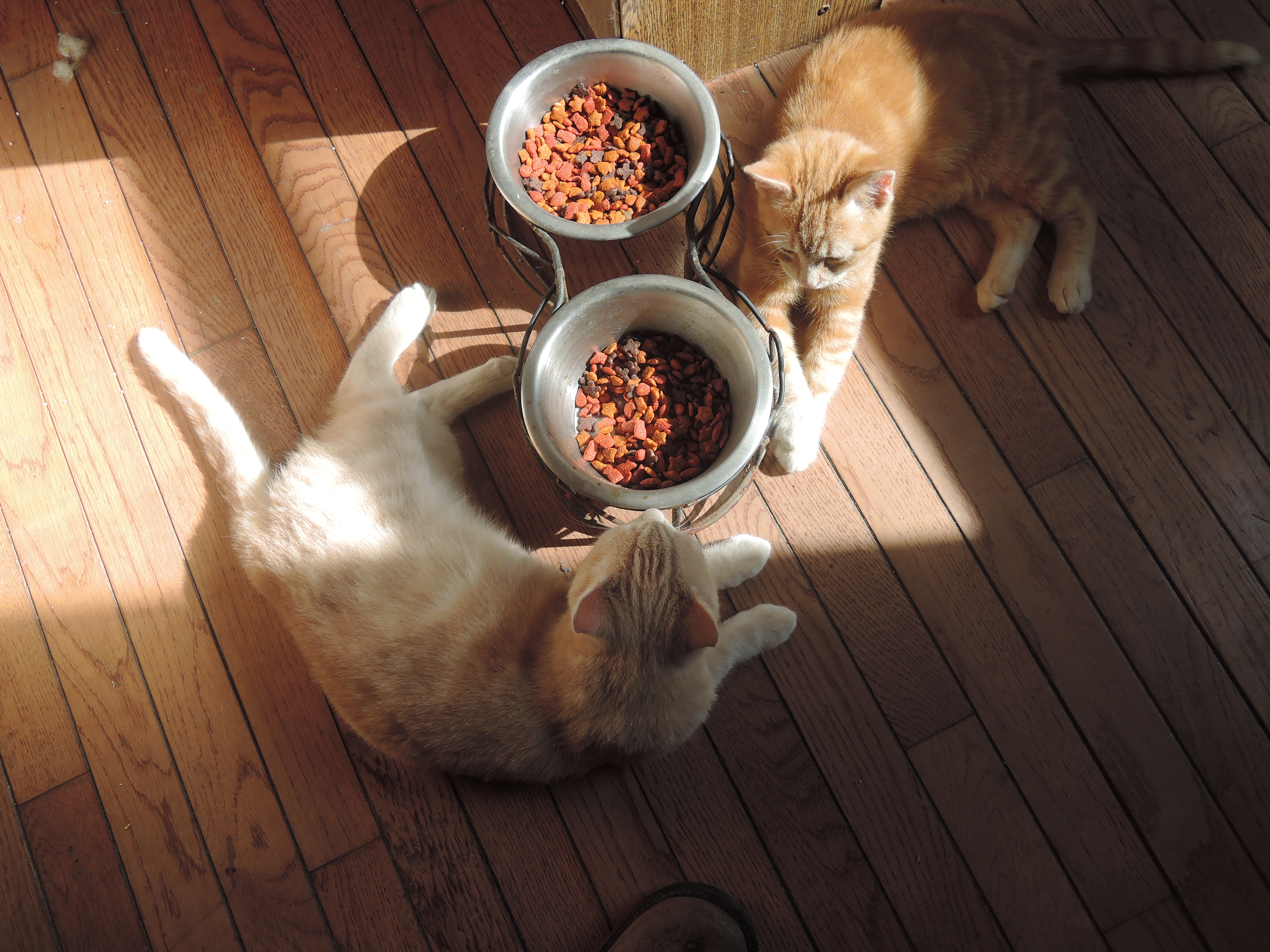
So he kept coming an’ we weren’t so scared of starvin’ any more, but it got REALLY REALLY cold. An’ then he came with a lady one day an’ he asked us to get inta this box with wire sides. Richie wasn’t all that excited about it, but I just said, “Hey, remember what happened to Sissy?” an’ he followed me. We trusted this guy.
The guy’s wife took us to this place called an Animal Hospital, an’ she left us. At first I thought maybe I’d made a big mistake, ’cause they gave us shots an’ then we got sleepy an’, well, I’ve heard stories about places like that. But when we woke up we could have all the food we wanted an’ there were all these pretty girls workin’ there an’ they were cuddlin’ us an’ callin’ us brave an’ everything. That was nice.
That’s how we got our names. One of ’em named us Raymond and Richie Martin, after some guy who wrote a book humans go nuts over called Game of Thrones?
Richie an’ me, we prefer games with jingle balls. Not long after we had Third Lunch, another lady came with another one of those wire boxes an’ she took us ta this nice place FULL of books – an’ other cats. The other cats told us we’d be safe there, an’ we’d get adopted. An’ the guy cat asked if we were a little sore down there, like -yeah, now you mention it, we were….
Again, Richie got worried ’cause we’ve always been together, an’ I can’t imagine settin’ up house without him, but the lady who runs this place brought us Second Breakfast this mornin’, an’ she promised not ta split us up. She said we should rest an’ eat an’ let people see us, an’ she’d work on gettin’ us a place together.
I sure hope she can. Richie, he’s a nice guy, but without me, he’d fall apart. That’s Richie on the chair. His fur is a lot darker than mine, plus he’s smaller. I look out for him.
So that’s our story, an’ we’re just waitin’ to see what life brings. I’d like to thank that family who brought us to the hospital, an’ all the people who helped us there, an’ the bookstore people here. Me an’ Richie, we intend to pull our weight, y’know? We’re good mousers, an’ we can help keep the dogs in line- not scared of ’em, knew some nice ones back there at the trailer park. Plus we’re good cuddlers. If I do say so myself, I’ve got really soft fur, an’ Richie is a big purr kinda guy. Fur therapy? We can deliver.
So maybe you need some mouse protection, or just a coupla bachelor brother cats to liven things up around your place. We’re not interested in girls – not since that hospital visit anyway – so we’d be real happy to just hang at your place an’ watch pro wrestling. Or Masterpiece Theatre. We ain’t fussy.
Come visit, an’ let’s have a beer an’ talk things over.


